
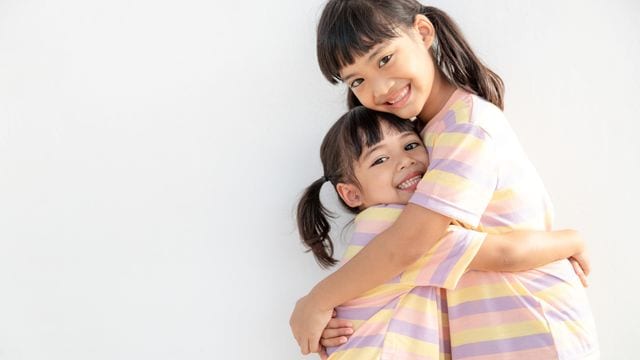
Sibling rivalry is a natural and common occurrence among brothers and sisters since each has a unique personality and a diverse point of view on certain things. Often thought of as a harmless phase and merely a part of growing up in families with multiple children, publication on family dynamics say otherwise. It is associated with sibling bullying that is linked to lower sense of competence, self-esteem, and life satisfaction, as well as more internalized problems.
What is sibling rivalry?
Sibling rivalry refers to the competition, jealousy, bickering, and conflicts that can arise among kids being raised in a family. Sibling rivalry can manifest in countless ways in different stages of childhood and adolescence (and up to adulthood if not addressed early!).
It comes in all shapes and sizes, typically in forms of verbal and physical abuse, name calling, voicing feelings of envy and disapproval, and being in constant competition or seeking attention.
Parental pitfalls
Yes, there are things parents say and do that potentially lead to sibling rivalry (and for all we know we might have been guilty one time or another).
Parents may not be fully aware that they are also concocting the recipe for sibling rivalry such as labeling (“Math genius”, “prettiest among the Tres Marias”, “the one who will follow Daddy’s footsteps”), pitting siblings against each other (“Bakit di ka gumaya sa ate mo?” or “Walang wala ka sa kuya mo pagdating sa mga bagay na ‘yan. Dapat hindi ka pumapayag na lagi kang talunan”), or constantly praising one child and criticizing another (“Naku, ito talaga pinakamabait sa mga anak ko samantalang yung iba diyan ewan ko ba”).
What else breeds sibling rivalry?
Major life changes
New baby? New house? One parent leaving?
Siblings may perceive limited parental attention when a family goes through a major life change. We’re not ignorant of the fact that sometimes the arrival of a new member of the family may cause jealousy and resentment leading to rivalry. If these major life changes are not anticipated nor processed, they can impact how siblings interact.
Individuality
Differences in personalities, interests, or abilities may contribute to rivalry as children may feel the need to compete for validation or recognition. Gifted ability or lack of a certain skill of one kid may either be perceived as a threat or a reason for ridicule.
Birth order and family dynamics
Birth order can influence sibling dynamics, with the firstborn possibly feeling dethroned by the arrival of a younger sibling, as well as younger siblings vying for parental love and validation. Psychologist Alfred Adler, according to his birth order theory, believes that birth order has a significant and predictable impact on a child’s personality and their feeling of inferiority. In his theory, the first-born is the “guardian of law and order,” the second-born is the “shadow of older sibling,” the middle child is someone “who fights for significance and privilege” and the youngest is someone “constantly feeling inferior and trying to prove oneself.” In a brood where older siblings think of themselves as more powerful than the younger ones, harmony and attitude towards each other can be significantly impacted.
Drop the labels and resist comparison. It's normal and understandable that a parent might be particularly proud of one child — or find another one difficult to deal with sometimes. But if we practice mindfulness, we will be able to vocalize our pride and love without having to compare our children.
In addition to family dynamics, having a sibling who is sick for most of his life typically has the spotlight for care, priority, and attention, leaving the other children wanting to be attended to as well.
Unequal parental attention due to perceived favoritism can also contribute to rivalry.
Territorial disputes
Sharing common spaces, toys, or belongings can lead to conflicts especially if items are taken without permission, boundaries are crossed, privacy is breached, or loss is not well-tolerated.
Age and Developmental Differences
Age and developmental disparities may result in different needs and expectations, leading to rivalry.
Related Read: Sinasaktan Ng Anak Ko Ang Kapatid Niya! Paano Ba Iwasan Ang Sibling Rivalry?
Telltale signs of sibling rivalry
Verbal and physical fights
Constant bickering, name-calling, quarreling, picking on each other, or physical fights between siblings are common signs of rivalry.
Jealousy
Displays of envy, such as resentment or competitiveness, can be evident in your children’s behavior.
Attention-seeking behavior
Attention-seeking actions, even negative ones, might be a way for a child to gain recognition.
Siblings may engage in tattling as a means to get each other in trouble or seek parental intervention.
Withdrawal or isolation
You might probably notice some children may withdraw or isolate themselves to avoid conflicts with dominant siblings.
Read Also: May Favoritism Ka Ba? Paano Iparamdam Sa Mga Anak Mo Na Wala Kang Paborito Sa Kanila
How should parents deal with sibling rivalry?
Here are 5 tips for raising siblings without rivalry:
1. Promote family as a team
As young as the kids are, promote a “team culture” for the family. In a team,whether in sports or in business, we look after each other, we supplement each others’ needs, we keep each others’ backs and we fill the voids and gaps, right? We apply the same principle to the family. We support the members’ victories and we feel happy for their wins. We offer a lending hand to the ones struggling. If we teach our children that we are all members of the same team, we therefore show them that we fight our battles together and not against each other.
2. Set clear expectations, house rules, and routine
Clearly communicate expectations for behavior, sharing, and conflict resolution. We can involve them in making house rules and display them on the fridge or the living room wall. We establish routines like taking turns: sibling A gets to play the toy first today but next time sibling B gets to be the first one.
3. Encourage communication and respect
Tough times can run emotions high. If we teach our children (and model) to verbally express their feelings and needs with respect rather than through aggression, we can help clear the pathways to rivalry. It is important to keep our behavior with our spouse in check because children model what they see, and not simply what they hear.
4. Lose the labels
Make a conscious effort to spend quality one-on-one time with each child to reduce perceptions of favoritism. Drop the labels and resist comparison. It's normal and understandable that a parent might be particularly proud of one child — or find another one difficult to deal with sometimes. But if we practice mindfulness, we will be able to vocalize our pride and love without having to compare our children.
5. Acknowledge feelings and foster a loving environment
Validate and acknowledge the feelings of each child to help them understand and manage their emotions. Listen to what they have to say. Sometimes, if we see one of our children hurt, crying, or bleeding, we tend to side with the victim right away. We rush to lash out at the other child who behaved poorly. Listen to both sides of the story, their motivation, and their plan of action now that this happened. If they can settle the squabble themselves, let them be. Consider sibling bonding activities and plan family activities that encourage affinity, connection, and positive interactions. It can be team building activities, camping, playing sports, or preparing and sharing a meal together.
The most lasting relationship
“Siblings are most people’s longest-lasting relationships—from early in childhood through old age. This means they can understand you in ways other people can’t,” says Susan McHale, PhD, a professor of human development and family studies.
Since this is the longest lasting relationship our kids could have, it is imperative that we help them make it worth the passing of time. It is fine and normal to disagree, but it is not okay to be mean and disrespectful.
More from sp

Lorem ipsum dolor sit amet, consectetur adipisicing elit, sed do eiusmod
Lorem ipsum dolor sit amet, consectetur adipisicing elit, sed do eiusmod
