
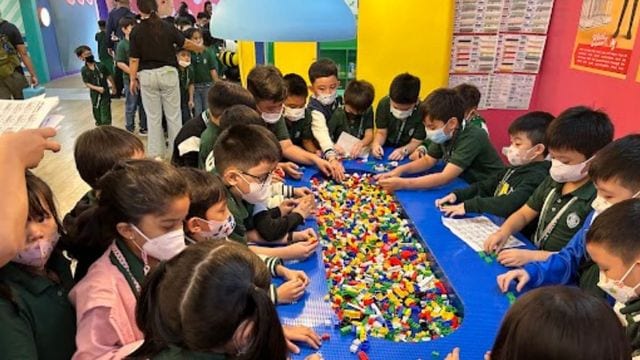
Millennial parents know how field trips or educational trips are one of the most anticipated activities every year. And it’s easy to see why: we got to explore new places with our school friends, eat to our hearts’ content, and enjoy each other’s company on the bus. However, as parents, it seems we are finding it increasingly difficult to allow our children to participate in these activities nowadays–and possibly for good reason.
Recently, we’ve seen several field trips involved in accidents. There was the tragic bus fire in Thailand, the Tanay bus crash a few years ago, and more recently, another trip that “endangered” participants due to a lack of preparation, leaving teens walking for hours. These incidents are significant factors behind why parents today are more hesitant to let their children join such trips, even when they are official school activities. Whenever we see news of tragedies involving kids, it’s natural to worry about the safety of our own children.
Do the Benefits Outweigh the Risks?
Considering the risks involved and the hesitation of many parents, why do schools still organize such trips? Smart Parenting Board of Experts member and early childhood educator Thumby Server Veloso explains the benefits of educational trips:
Real World Learning and Hands-On Experience
Field trips provide a valuable opportunity to support classroom lessons by visiting historically significant sites and science discovery centers. “Being in the same place where a hero took his last breath, or seeing the actual specimen of a gigantic crocodile, or sitting inside a real aircraft that survived war–these experiences leave an impression on young minds that can last a lifetime,” Teacher Thumby explained. “They also bring to life the lessons that were discussed in the classroom and give them deeper meaning.”
Spark Curiosity and Engagement
Field trips are an enjoyable way for children to learn with their peers outside the classroom. They help build memories and foster stronger relationships among classmates. Teacher Thumby noted, “During field trips, you’ll see students laughing, exploring, pointing out things out, taking photos or videos, and even asking questions. This is a great way to make classroom discussions livelier and more meaningful.”
Appreciation for Culture and Environment
Depending on the itinerary, field trips also teach children to appreciate and care for their culture and environment–or even inspire them. “Depending on where [schools] take their class, students tend to care more deeply about aspects of their culture when they have a better understanding or more knowledge about it,” Teacher Thumby explained. “After a trip to an art museum, students will not only be able to name and recognize the works of local artists, but they may also be inspired to test their own talents. Similarly, a visit to a nature park will get them talking about deforestation, conservation, recycling, and other environmental issues.”
Enhancing Classroom Culture
Field trips can strengthen the bond between teachers and students. “As a teacher, I know how much field trips serve as positive motivators. My students love to get out of the school–they love the change of pace, and the change of environment and routine,” Teacher Thumby shared. She also noted that it doesn’t have to be a big trip: “It could be a class trip to the grocery to practice math, health, home economics, and reading. Or we’ll walk to a nearby park for some exercise or get inspiration to compose poetry.”
Field trips can also be effective classroom management tools. “Bargaining for a field trip helps build trust between the teachers and students,” Teacher Thumby said. “If the students behave a certain way, or all do well in a specific test, project or presentation, they get to go on a class trip. Then, the teachers hold their end of the bargain by taking the class out, and everyone is happy. Of course, this cannot be done too often, but when spaced out well enough and with clear rules, it serves as a great classroom management tool.”
Physical Activity
Field trips encourage children to engage in much-needed physical activity and even keep them from their screens for a day. “With our children being such tech-experts, more and more teachers and parents are complaining about how little exercise they get,” Teacher Thumby said. “We did a couple of field trips with our elementary children where they went for short hikes, which they absolutely loved. And yes, they were exhausted afterwards (so were the teachers), but it was great to see them moving around outdoors.”
Developing Socio-Emotional Skills
Perhaps one of the most important benefits of field trips for kids is the cultivation of independence and self-sufficiency in children. Aside from taking care of themselves and their belongings, Teacher Thumby explained that, “They also learn to be aware, partner up, follow directions, lead, and listen–because they don’t want to get lost while enjoying their time away from school.”
Memories That Last a Lifetime
Field trips often make up some of the fondest school memories and we should allow our children to experience the same. Teacher Thumby, shared, “I have vivid memories of my grade school visit to the Chocolate Hills of Bohol in Nayong Pilipino.”
“We should remember that there are risks everywhere. Accidents can happen at any place and time. We cannot decide to keep our children home simply based on fear.”–Thumby Server Veloso
Do Parents Have a Choice?
While field trips offer numerous benefits, parents ultimately have the right to decide whether to send their children, especially in cases where health is a concern. However, as Teacher Thumby explained, “Some schools may implement consequences, which parents will just need to accept, especially if classroom activities or requirements will be based on things learned during the field trip.”
It’s important to note that the Department of Education (DepEd) considers field trips supplemental activities and does not mandate them. Schools must ensure that students who opt out are not penalized and are provided with alternative learning activities. The DepEd also strictly requires schools to obtain written parental consent for such activities.
When it comes to the risk of accidents, Teacher Thumby emphasized, “We should remember that there are risks everywhere. Accidents can happen at any place and time. We cannot decide to keep our children home simply based on fear.”
How Can Parents Ensure Their Children’s Safety on Field Trips?
Parents can alleviate their anxieties and ensure their kids’ safety by communicating and working with schools. Here are some tips:
Determine Guardian Needs
For younger children (preschoolers to Grade 1 or ages 6 and below), guardians are essential due to their dependency. “In public places, it’s already hard for one parent to manage all their own children–what more a class of 15 youngsters? Plus bathroom breaks for children this young are tricky to manage if you have children needing to use the toilet at different times of the day,” Teacher Thumby explained.
Clarify Adult-Child Ratios
Older children also require appropriate adult-to-child ratios, depending on their age and class size. For schools that have neurodivergent children in their classes, Teacher Thumby said that they should also make sure to bring more adults to chaperone.
Obtain All Relevant Information
Schools typically send an official letter informing parents of the field trip, which should include basic information such as the date, itinerary, and expected times of departure and arrival among others. If you’re not satisfied with the information the school has provided, then it’s best to talk to the teacher about your concerns. Some questions Teacher Thumby recommends asking include: “How will the children be managed? What is the adult-child ratio? Who are the adults who will accompany your child’s class? What will they do in case of an emergency? What are their safety protocols?”
Evaluate Familiarity with the Venue
Check if the field trip itinerary includes places your school regularly goes to. Having the same field trip every year (for the same grade level) is not a bad thing, as it means the school teachers and officers are very knowledgeable and familiar with the place. If it’s a new inclusion, try to find out if the school did an ocular inspection. As Teacher Thumby emphasized, “Getting a sense that they (school/teachers) are familiar with the place, risks, and safety measures might help ease your anxiety.”
Ask About the Field Trip Provider
Most schools hire a third party tour company who will be responsible for the buses, tour guides, and even food. Checking and knowing that the tour company in charge is a reputable one can help relieve your anxieties.
Check for Parent Volunteers
Some schools allow a limited number of parents to volunteer as guardians on field trips, these are usually chosen by the faculty or parent board. You can try to volunteer if you have the time and willingness to do so, but in doing so, it’s also best to remember that you are not just responsible for your own child but for the whole class. If not, then you can try to acquaint yourself with your child’s class’ parent volunteer, so that he/she knows your child as well. Teacher Thumby shared her experience, saying, “When my son went on his first field trip without me, one of the parent volunteers assured me she would watch out for him, and sent regular updates in our group chat, which I really appreciated.”
Prepare Your Child
You can opt to let your child use GPS trackers (like smart watches or pintags) that can help you know where he/she is at any given time. But for Teacher Thumby, what’s more important is to teach your child what they can and should do when out in public places. “When you take them out to malls or other places, show them how to talk to people (of authority, service providers, security personnel), and teach them how to avoid unscrupulous people,” she said.
While letting children go on a trip without parental supervision can be daunting, parents shouldn’t let fear hinder their kids’ growth and development. By working with schools and preparing children, parents can make informed decisions about field trips and ensure a safe and enriching experience for their children.
Read here for what parents can expect from schools during field trips.
What other parents are reading

Lorem ipsum dolor sit amet, consectetur adipisicing elit, sed do eiusmod
Lorem ipsum dolor sit amet, consectetur adipisicing elit, sed do eiusmod
