
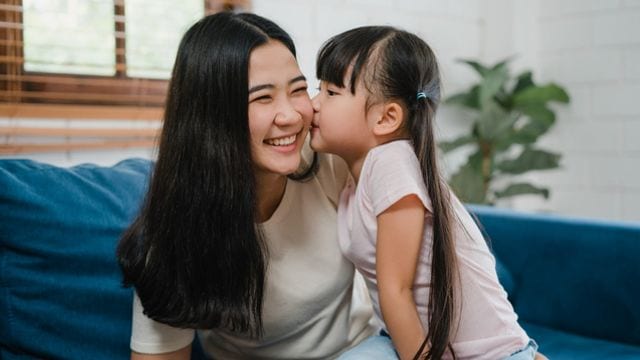
Parenting, like all other things, is continuously evolving through time. There are lots of available theories, resources and even seminars for parenting nowadays, and one of the most talked about styles today is gentle parenting.
If I’m going to be honest with myself, I can only do gentle parenting about three out of ten times. The rest of the day, I turn into a ‘momster’ who’s easily irritated with toys on the floor. It’s difficult and the guilt afterwards is even harder.
An anonymous soon-to-be mom shared in the Smart Parenting Village (SPV) her own personal experience, why she decided to learn and apply gentle parenting:


Driven by her own experience with punishment, she read psychology books to understand why her parents raised her the way they did. She did not only experience physical punishment but also received verbal mistreatment such as “bobo” and “tanga”.
She eventually forgave her parents after applying what she learned.
Anonymous soon-to-be-mom then got a chance to take care of her niece and decided to do things differently from her parents. She read up and studied gentle parenting and applied the basic theories. She started taking care of her when she was six years old and now that she’s twenty years old, she testifies to the fruits of her labor with gentle parenting.
Mahirap maging gentle parent
Parents who apply the same parenting style in SPV also shared their personal testimonies with Gentle Parenting, and what happened to their children:
Nina Chryzzy Mizzy said, “Mahirap magpaka-gentle parent, pero mas mahirap na makitang lumaki yung mga anak natin na may trauma at malayo ang loob sa atin. Marami na rin nagsabi sakin bakit daw masunurin si bebe. Kasi koneksyon ang kanyang pundasyon, na never ko karanasan nung bata ako kaya hindi ko ipaparanas sa kanya ang bad childhood.”
'Mahirap magpaka-gentle parent, pero mas mahirap na makitang lumaki yung mga anak natin na may trauma at malayo ang loob sa atin.' – Mom Nina on gentle parenting
Another mom related to the story of the anonymous soon-to be-mom, “Yes, isa rin sa reason my why partner and I chose gentle parenting is yung walang nabuild na trust between our parents and us, their children. Pakiramdam namin ang hirap maging honest kasi papaluin ka or bawal magkamali kasi papaluin ka.
"Gusto namin na open communication and I really said to my partner na gusto ko kapag may worries, problema or anything na nagpapasaya sa anak namin, yun ang una niyang pagsasabihan kaming magulang niya kasi alam niya na safe and willing to listen kami. And it’s so nice na nakikita namin yung effect noon sa anak namin,” Ericka Miguelle Fernandez shared.
What is Gentle Parenting
According to a blog Natalia Oliver, a classroom educator, copywriter and writer, wrote entitled 'A Beginner's Guide to Gentle Parenting' on Guide Post Montessori, gentle parenting is a parenting approach that encourages a partnership between you and your child to make choices based on an internal willingness instead of external pressures.
It means there are no rewards or punishments, and the child must learn how to initiate and learn what is the desired behavior.
Sarah Ockwell-Smith, parenting expert and author of the book The Gentle Parenting, said that Gentle Parenting can be summed up in three words: empathy, understanding and respect.
RELATED: 3 Gentle Parenting Myths and The Truths Behind Them
While gentle parenting has lots of available information now, most parents find the theory to be hard and somewhat impossible to apply.
In the same thread discussing gentle parenting, a mom got candid and shared that she is having a hard time applying it to her own kids:
“Same scenario pero hindi ko ma-apply sa kids ko ang gentle parenting . May time na may mahaba ang pasensya ko, may time naman talaga na sa kanila ko naipapasa yung highblood ko sa daddy nila at sa mundo, gustuhin ko man pero parang pag andun na ko sa sitwasyon na nakakagalit, nabibigla na lang ako sa words,” Lorena Gene Rivera Limbo shared.
If parents were honest, we can all relate to this at least once (if not most times). We often find that we just can’t seem to be the “ideal gentle parent'' that we aspire to be.
RELATED: 'Kasalanan Ko Daw Hindi Nakikinig Ang Bata': Mom Asks What To Do 'Pag Magkaiba Ng Parenting Style
Why gentle parenting is hard
We often try to be a gentle parent, but only feel more guilty when we go back to square one. The discussion in the Smart Parenting Village pinpoints one of the reasons why gentle parenting is hard - because we are trying to break the cycle of how we were raised.
Just like the anonymous mom-to-be, another mom shared her own personal experience with corporal punishment:
“Totoo ito. Lumaki din ako sa palo, lahat na ata, pero hindi naman nagsasalita ng bad words. Ganun lang sila mag-disiiplina sa amin pero malaking impact pa rin. Lumaki akong matapang kasi hindi ka pwedeng magpa-api dahil kasalanan mo o kaya kapag umiiyak kang umuwi sa bahay, ikaw pa rin ang papaluin, hindi ko rin masisi sila ganun din kasi sila pinalaki,” said Rowena Lli.

She then shared that with her first two children, she was also using corporal punishment as discipline but decided to shift to gentle parenting with her youngest.
She continued, “Though na-apply ko din sa mga anak ko (corporal punishment), pero nung pangatlo ko nang anak hindi na. Gentle na hindi gaya noon. Swerte nga daw si bunso kasi hindi nakatikim ng palo at sabunot.”
Unconsciously, we parent our kids the same way we were raised.
According to Jennifer Nurick, a licensed Clinical Psychotherapist, Counsellor and Energetic Healer, “Generational patterns repeat through a family because people tend to parent how they were parented. Being the ‘cycle breaker’ in a family is not an easy role. It is often not chosen by the person concerned. It is a deep impulse and inner knowing that the old ways of being in the family system are not for them.”
RELATED: ‘I Used To Believe In Spanking’: Disiplina Ba Ang Pamamalo? Studies Say It's Ineffective
Gentle parenting is hard because we are trying to be “cycle breakers” even if it means that we also have to go through our own triggers.
Connect before you correct
Can we become the ‘gentle parent’ we aspire to be? Probably yes, sometimes. Especially when we're just trying it out.
But if we can’t, the number one secret to applying the style is to forgive ourselves for not being able to apply it as much as we want to. Our children will appreciate an honest parent - even if it means we cry in front of them - rather than a parent who forces everything to seem okay on the surface.
From all the experiences shared in SPV, one thing became apparent to successful parenting (not just gentle parenting): connection before correction.
Those who shared that gentle parenting is effective for them, cannot do it without having an intimate connection with their children.
Those who shared that “palo + explanation” is effective to them, also won’t find it as effective if they didn’t build trust with their children.
"Bago ko sila paluin ini-explain ko kung bakit. At kung alam ba nila ginawa nila kung kaya dapat sila mapalo. Ini-explain ko din na sabi ni Lord dapat i-discipline ang bata. Sinasabi kong mahal na mahal ko sila kaya ko yon ginagawa. Kasi ayokong lumaki silang walang disiplina. Sinasabi ko kung anong mali sa ginawa nila at ano ang tama. At proud din ako na very open sila sakin,” Vanessa Labrador Crisostomo shared.
Pham Nunez also shared, “I have a daughter, we discipline her by palo and explanation. Hindi namin siya minumura or whatever bad words towards her. Kung mapagalitan man sya we explain bakit sya pinagalitan. Kung mapalo man siya, we explain bakit dumating na sa point na may palo. Lumaki din ako sa puro mura ang tatay namin sa amin. Mas masakit ang words kesa sa palo. Dadalhin mo yun hanggang pagtanda. Nasa tao pa din paano niya gagamitin ang palo sa pagdisiplina. Ang sobra sa lahat ng bagay ay hindi din makakabuti.”
RELATED: Melai's 'Face the Wall' and 'Luhod' Style of Discipline Earns Admiration From Netizens
We need to establish a connection and relationship with our child before any correction can be effective.
Josh McDowell, a seasoned public speaker and author has a parenting quote to remember: rules without relationships lead to rebellion.
Even if we practice gentle or traditional parenting, our rules and standards will not be effective if we don’t have a relationship with our child. Worst case scenario, it might even lead to rebellion.
Our automatic relationship with our child is biological, but the intimate relationship built with empathy, trust and respect, it’s something we must create with them.
Whenever I'm at my wits' end and there are toys everywhere triggering me, I remember this quote that helps me to think twice about my actions: "Make your child fall in love with you." And the rest will follow.
What other parents are reading

Lorem ipsum dolor sit amet, consectetur adipisicing elit, sed do eiusmod
Lorem ipsum dolor sit amet, consectetur adipisicing elit, sed do eiusmod
