
Trigger warning: The article discusses depression and death, which some readers may find distressing.
'Postpartum depression is real.'
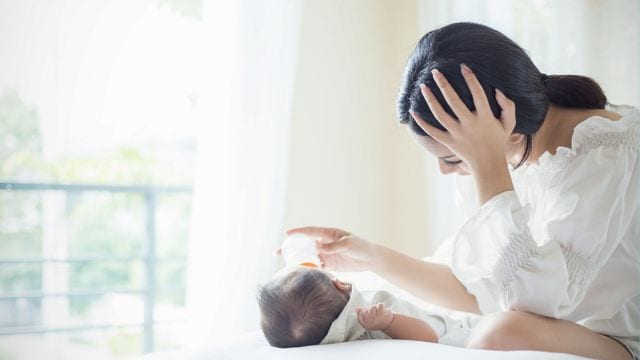
We've read this sentence countless times in parenting articles and on social media. But it hits differently when it's because of a tragic news story, one involving the death of a mother and her children.
The term "postpartum depression" or PPD is often used but it's important to understand that there's a spectrum of disorders that can affect mothers during pregnancy and after birth. That's why it's sometimes called "perinatal depression," covering the period from pregnancy through the baby's first year.
It's even harder to read when it hits home. In 2021, I was diagnosed with postpartum depression. I went through the worst parts of it during the COVID-19 pandemic. I had an emergency cesarean section, gave birth to a premature baby, struggled with breastfeeding, was unemployed, and isolated from my family due to the lockdowns. It was the perfect storm for depression. On top of that, there were deaths in the family, and I had to make the painful decisions of whether to attend the funerals via video call or in person.
It turns out, I was not alone. A 2024 article in the Philippine Journal of Obstetrics and Gynecology studied pregnant COVID-19-positive patients. Out of 61 patients aged 25-34 years old, 32.8 percent, or 20 mothers, showed signs of PPD, an alarming rate even in a small study.
But with the help of a support system and faith, I survived. I believe one of my life's purposes—something PPD nearly cut short—is to advocate for maternal mental health.
Postpartum depression, 'a silent epidemic'
Studies show that postpartum depression affects 1 in 7 people worldwide, and about 16 to 58 percent of mothers in the Philippines. It is a condition marked by persistent feelings of sadness, guilt, and hopelessness, and is linked to an increased risk of self-harm and suicide.
Dr. Karen Rendeza, RGC, RPm, LPT, founder of Peripartum Champions, a research-based advocacy for maternal mental healthcare, calls PPD a silent epidemic. In an interview with Smart Parenting, she explained:
"Psychological wounds are invisible. That is why many of us ignore what we think and how we feel, even if they bother us so much. PPD is prevalent, yet remains ignored, unreported, undetected, and not intervened until it worsens into mental illness or death. It's a public health problem that requires everybody's literacy."
According to Postpartum Support International (PSI), symptoms of postpartum depression differ for everyone and may include:
- feelings of anger, fear, and/or guilt
- lack of interest in the baby
- changes in appetite or sleep
- difficulty concentrating or making decisions
- thoughts of harming the baby or oneself
In her doctoral dissertation on mothers who recovered from PPD in 2022, Dr. Rendeza found that stigma remains a major barrier, which results in mothers refusing to seek professional help and get treatment.
"The moms I interviewed said they never discussed their mental health with their OB-GYNs because during prenatal check-ups, they were asked only about their physical health. Furthermore, some medical doctors and other staff who take care of expectant mothers and newborn children revealed that PPD is new to them as well. While many mothers suffer so much in PPD, the personnel in the hospitals or lying-in clinics claimed that they have not yet encountered patients having peripartum depression or PPD."
Not just a mother's illness
In a 2024 article by Cebu Daily News, Dr. Regie Afroilan, a medical specialist from the Department of Health and chairman of the Psychiatric Department at Capitol Medical Center, emphasized that postpartum depression affects more than just mothers. "When we talk about postpartum depression, it pertains to the depression experienced by our family because postpartum doesn't necessarily affect the mother. It also affects the father, the caregiver, the baby, and also the surrogate."
Postpartum depression is a family affair, studies show. More than the effect on a mother's capability to care for her child, PPD, when untreated, can lead to a disconnect between a parent and child, developmental issues, and personal health risk.
Without appropriate intervention, poor maternal mental health can have long-term and serious consequences for the mother, child, and the entire family.
Jamie Hales, a licensed clinical social worker at Huntsman Mental Health Institute, said in an article by the University of Utah, "Suicide and overdose are the two most common reasons women will die in the first year postpartum." Hales underscores the importance of the family or immediate circle of the mother speaking up when they see concerning behavior.
Postpartum psychosis is the most severe and least understood condition in the range of perinatal mental health disorders. It's more likely to happen to first-time mothers, especially those with a history of bipolar disorder and experiencing sleep loss. This condition can lead to thoughts of suicide or harming the baby, and it requires immediate medical attention, including hospitalization and psychiatric care.
Helping mothers help themselves
Here are some reminders for areas to support families navigating the postpartum season.
1. Emotional and social support
Rest is essential for newly-birthed mothers, especially for moms who delivered via C-section. "Having some hours of break or rest between child-rearing duties is a big help," she says. "There should be someone who will take over so moms have enough time to regain their strength." Shared responsibility in child-rearing and household chores can significantly ease the burden. Some moms who don't have relatives to help them avail of the services of a night nurse or an on-call helper.
2. Financial support
New mothers should be financially supported so they can prioritize recovery without pressure to return to work too soon.
A 2020 local study also found that women earning below P10,000 monthly income and below a tertiary educational level attainment were more at risk of developing PPD.
3. Psychological support
Pregnant and postpartum moms are encouraged to consult mental health professionals for early detection and care, even before symptoms emerge.
Meanwhile, here is some practical advice for mothers in the thick of parenthood.
Advocate for yourself.
With the social media platforms available, communicating our thoughts and feelings has somehow become easier. Experts also encourage moms to talk about their feelings without fearing judgment, whether to their family members or in online support groups, wherever they feel safe. This can help normalize PPD and reduce stigma.
Have a 'sanity buddy.'
This could be a friend, a group of parents, or an online community. Having someone to talk to can lighten the emotional load and remind you that you're not alone.
Treat self-care as a necessity.
"Listen to your body—it doesn’t lie," says Dr. Rendeza. "Even a five-minute nap can help more than a cup of coffee. As a mental health professional, wife, and mom, my me-time is non-negotiable. I can only give when I have something to give."
Set boundaries.
Establish personal and professional boundaries for mothers who will return to work. Learn how to delegate tasks to other family members and in the organization. This keeps them from getting overworked by the demands of multiple roles and duties. Choosing your battles and saying no is also important. Likewise, mothers have to learn to assert themselves and be humble enough to seek professional help.
Faith helps.
When a mother is faced with the overwhelming load of motherhood and struggling with identity loss and transitions, it's comforting to have something to hold on to, such as faith and spirituality. Faith keeps us from feeling helpless and hopeless, especially during the long nights of nursing and caring for a child when they are sick.
A final word
Postpartum depression is treatable, and it's not a mother's fault. This is a hard piece to write. But I write it for the moms who are still here and for those who have gone before us—those who struggled in silence, trapped by stigma. They didn't deserve to suffer alone. They shouldn't have been ashamed to ask for help. They weren't just statistics. Like me, they could have lived to tell their story.
Maternal mental health is everyone's concern. We need more than awareness—we need action, empathy, and support for every mother, partner, and child affected. Let's talk about it, listen, and be mindful of the signs. Above all, let's believe mothers when they say, "I'm not okay."
Dr. Karen V. Rendeza, RGC, RPm, LPT has a PhD in Counseling. She is a faculty member at the Bulacan State University, and founder of Peripartum Champions, a research-based advocacy for maternal mental health.
24/7 NCMH Crisis Hotline: (02) 1553 (Luzon landline); 0917-899-8727 (Globe); 0919-057-1553 (Smart)
More from sp

Lorem ipsum dolor sit amet, consectetur adipisicing elit, sed do eiusmod
Lorem ipsum dolor sit amet, consectetur adipisicing elit, sed do eiusmod
