
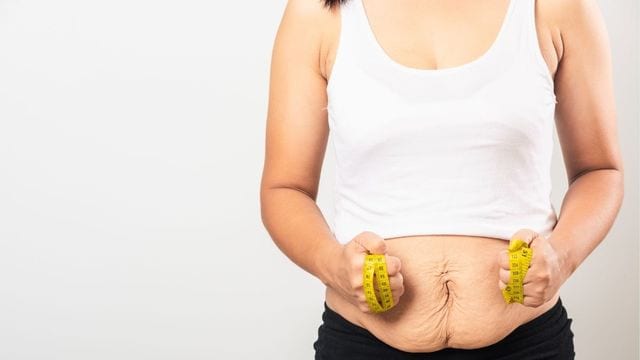
Ready to do some ab workout postpartum? Here’s everything you need to know: when to start, what to work on, which exercises to start with, and what to watch out for!
What is Diastasis Recti
Before we go into how to start your ab workout postpartum journey, let’s first examine what you will be working on.
Diastasis recti is a condition where there is a separation of more than 1 inch (2.7 cm) in your anterior abdominal wall. It occurs in 2 out of 3 women after pregnancy, usually lasting 6 to 12 months after delivery.
There is normally a separation in your abdominal muscles, but diastasis recti occurs when the separation is larger than normal. In this condition, the two halves of your abdominal muscles stretch or tear during pregnancy to accommodate your baby.
It usually heals on its own within the first year after delivery, but sometimes it persists beyond that, requiring exercise, physical therapy, or even surgery to repair.
Diastasis recti causes pain, discomfort, weakness, and a feeling of flabbiness in the tummy for most women, while some experience no symptoms at all.
If you suspect that you have diastasis recti, consult your doctor for a possible treatment plan before attempting any postpartum workout.
Safe Workout Postpartum
When you are discharged from the hospital, your doctor will typically tell you to wait until 6 weeks postpartum before engaging in exercise. However, every body, pregnancy, and birth journey is unique, so waiting for clearance from your OB-GYN is best.
What to do before working out after OB's go signal
Are you excited to hit the gym when your OB gives you the green light? There’s one last important thing you need to check!
Do a rec check
The stomach muscles that run down the center of your belly loosen during pregnancy, so the first step of any postpartum workout is to tighten and strengthen these muscles before moving on to postpartum ab workouts.
To do a rec check, lie flat on your back on the floor. Hold out your index and middle fingers together to feel the center of your tummy, just above your belly button.
Push your fingers down and tighten your muscles while lifting your head and shoulders off the floor. When you press down with your fingers, do your tummy muscles dip EXACTLY 2 finger-widths? If yes, you are ready to start a postpartum ab workout routine.
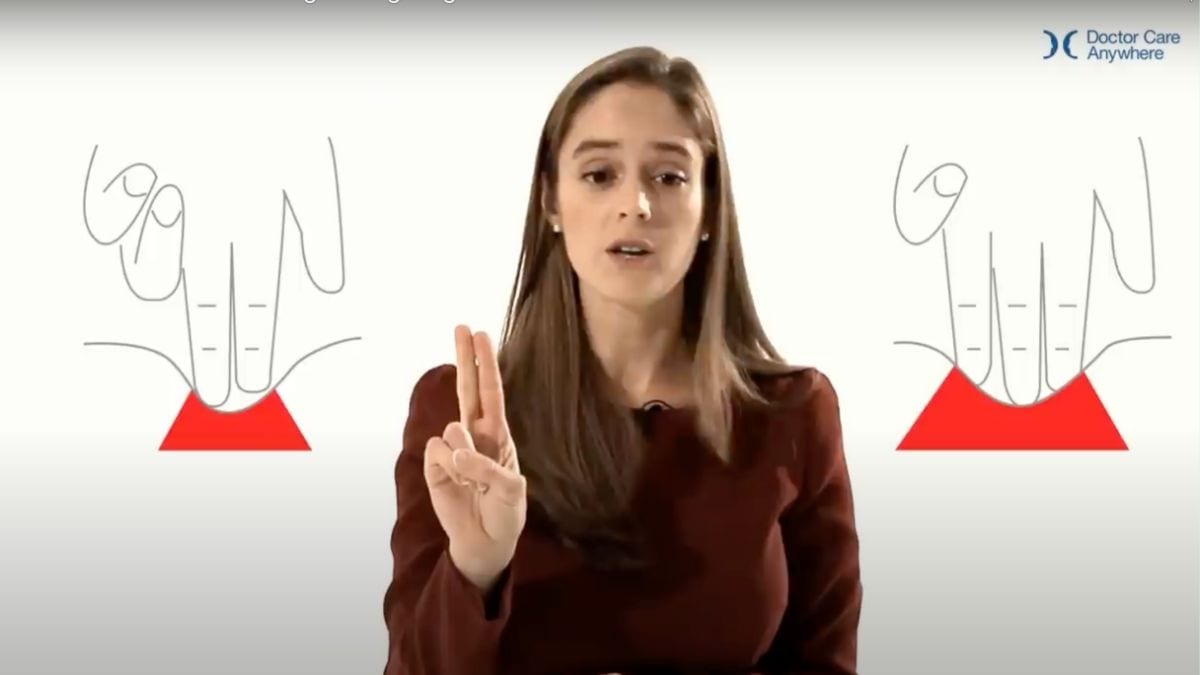
However, if your muscles dip more than the width of two fingers, you will need to hold off on any postpartum ab workout until they have closed up because your abdominal muscles have not yet fully recovered from pregnancy and cannot handle the strain of exercise just yet.
Consider using a postpartum binder
A postpartum binder or belly band is usually made of rubber and wraps around your tummy to provide support after childbirth. It is NOT designed to help you lose weight or regain your shape—the purpose of a postpartum binder is support.
Some moms feel the need for support immediately after delivery, so if you are one of them, yes, it is perfectly safe to use a belly band on the same day you deliver your baby. It provides stability and support, helping you move more comfortably as you adjust to daily life.
After delivery, your abdominal muscles are weak from being stretched out, so a firm postpartum binder can act like an external abdominal muscle, providing stability and support to your core region in the early stages while you wait for your muscles to heal.
A postpartum binder works like a crutch. Just as you rely on a crutch to take the weight off an injured limb, a belly binder takes the strain off your core until your abdominal muscles fully heal, and you can start working out again.
However, a postpartum binder will not fix your diastasis recti by itself. What will help is gradually strengthening your core muscles once they have recovered enough.
Similar to how a crutch is only temporary and how an injured person requires rehabilitation to regain strength, a postpartum binder is helpful support while you heal from diastasis recti.
How to wear a postpartum binder
Now that we know how useful a belly band is, how do we use it properly? When putting on your binder, ensure it is not too tight. Wearing it too tightly will not only be uncomfortable to wear all day, but it will also put excessive intra-abdominal pressure, which then pushes down on your pelvic floor.
Your pelvic floor is also weakened due to pregnancy because the muscles and tissue supporting it have been stretched.
How to strengthen your core after pregnancy
You’ll want to focus on gentle exercises when you start working out. For the first few weeks postpartum, begin with walking short distances, then gradually transition to gentle core workouts such as kegel exercises and the drawing-in maneuver.
Kegel Exercise
Lie flat on your back with your knees bent and feet flat on the mat. Align your lower back in a neutral position without pressing down onto the mat or overarching away from it. Maintain this neutral position throughout the exercise.
Take a few deep breaths and focus on relaxing your abdominal muscles and pelvic floor. Then, tighten your anus as if trying to stop passing gas. Now, tighten the muscles around your vagina and urethra as if you’re trying to stop urinating.
Start by holding for 3-5 seconds for up to 10 reps and 3 sets per day, gradually increasing the hold time. Do not grip your abdominal muscles, glutes, or thighs.
Drawing-In Maneuver
This ab exercise works on your deepest core muscles, which stretch during pregnancy and take up to two years to heal postpartum. So, it’s important to progress slowly.
Start in the same neutral position as the Kegel exercise. Inhale, then exhale slowly as if blowing out birthday candles, engaging your abs and pulling your belly button toward your spine. Perform up to 10 reps of this exercise for 3 sets per day.
When your body feels ready for more movement, you can progress to exercises like the bridge and the clam. If you are no longer experiencing postpartum vaginal bleeding, you can also begin low-intensity water exercises.
At about 6 weeks postpartum (for vaginal delivery) or 8 weeks postpartum (for a C-section), or when you feel ready, you can gradually start increasing exercise intensity and incorporate lightweight training until you reach 4 to 6 months postpartum.
Bridge
Begin in the same neutral position as the previous exercises. Gently engage your core so your navel moves toward your spine. Then, engage your glutes and slowly lift your pelvis and spine off the floor. Hold, then slowly lower your pelvis back down. Perform up to 10 reps with 2 sets per day.
Clam
This exercise helps strengthen your hip muscles, which weaken during pregnancy.
Lie on your side with your knees bent, feet flat, and hips stacked on each other. Activate your deep core by performing the Kegel and drawing-in maneuver. Next, gently lift your top knee toward the ceiling, ensuring your pelvis does not roll back.
You should feel your muscles tighten on the outside of your hip. Perform up to 10 reps for 2 sets per day.
During the first six months postpartum, the most important thing to remember is to listen to your body. Your doctor, physical therapist, or personal trainer will provide guidance, but ultimately, you are the best judge of your body’s readiness for different postpartum workout intensities. You can always cut back on the intensity levels or modify some workouts depending on your capacity.
At 6 months postpartum, you can start running, jumping, and performing more intense exercises such as planks and sit-ups.
Since your pelvic and abdominal muscles have been stretched significantly during pregnancy, you must wait at least 6 months before adding heavy loads to these muscles, or you risk hindering their healing.
How to avoid injury during your postpartum ab workout
Now that you know what workouts to start with, here are a few things to keep in mind:
- Avoid lurching during sit-ups or crunches, as this strains your head and neck.
- Always draw your belly inward toward your spine and hold.
- Exhale when contracting your muscles and inhale as you relax them.
- If your abdominal muscles cannot contract and hold, they are not ready for exercise.
And if you experience any of these at any point in your workout routine:
- New or worsening pain ANYWHERE in your body
- Feeling of heaviness in your vaginal region
- Urinary or fecal leaking
- Bulging or ridge along the midline of your abdomen
- Increased vaginal bleeding
- Soreness in your C-section scar
Consult your OB-GYN and possibly a physical therapist because you might have gotten injured.
And that’s it for postpartum ab workouts! Remember that working out during the postpartum stage won’t be like it was before when you pushed your limits and broke boundaries. This time, your primary focus is on healing and rebuilding your body after pregnancy.
Always listen to your body!
Read here for moms’ secrets to losing their postpartum belly.
What other parents are reading

Lorem ipsum dolor sit amet, consectetur adipisicing elit, sed do eiusmod
Lorem ipsum dolor sit amet, consectetur adipisicing elit, sed do eiusmod
