
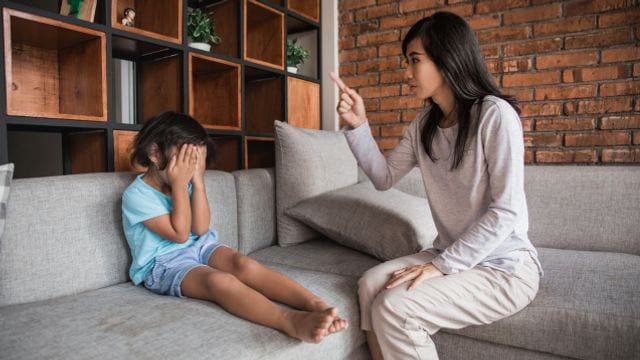
We often read and hear about positive parenting as a new parenting approach and Philippine lawmakers have now filed two bills in the House to support it.
Representative Angelica Natasha Co, Committee Chair for House Welfare of Children filed House Bill No. 8306, or the Positive Parenting of Children Act. It seeks to implement programs promoting positive parenting. And House Bill 1269 was filed by Bagong Henerasyon party-list Rep. Bernadette Herrera.
The House committee on welfare of children just gave the greenlight on a consolidated bill that bans the use of corporal punishment to discipline children. This is in hopes of discouraging child abuse within homes.
What other parents are reading
Parents or guardians may be penalized for humiiliating or degrading punshiment/corporal punishment on children as a form of discipline, according to both House Bills.
Rep. Co included a 2022 report from the United Nations Committee on the Rights of the Child on the “high prevalence” of all forms of violence against children in the Philippines, including corporal punishment, bullying and abuse in schools, domestic and sexual violence, and exploitation in her report.
Save the Children Philippines, a non-profit organization, supported the said act and stated, “Every year, thousands of children die as a result of violence at home, at school and other settings, and many more are seriously injured.”
About 9,000 children suffered from all forms of abuse, including physical and humiliating punishments according to a 2022 Report by Council of the Welfare of Children.
Save the Children Philippines added that many forms of violence against children would be considered “torture” if they were carried out on adults. These can include “smacking, but can also involve kicking, shaking, burning, and forcing children to stay in uncomfortable positions” as well as “humiliating treatment which belittles the child.”
RELATED: Stop Spanking or Making Your Child Kneel on Mongo Seeds, Pleads Teachers' Group
Where are we in terms of child protection?
According to a 2022 Report by the Council of the Welfare of Children (CWC), about 9,000 children suffered from all forms of abuse, including physical and humiliating punishments
In a case cited by Save the Children Philippines, ‘Girl Child’, a 16-year-old student from Paranaque would scream each time her mother burns her arm with a mosquito coil for household chores left undone. Whenever she passes by her mother’s stall in the market, she would overhear her mother gossiping, calling her a “prostitute” for coming home late. She ran away from home when her stepfather strangled her because her radio played loudly.
The Philippines is one of the 134 countries that’s bereft of legislation to curb physical and humiliating punishment against children. Currently, we only have RA 9262, or the Anti-Violence Against Women and their Children Act of 2004 as protection for children.
In the proposed house bill, children will be protected against physical and humiliating punishment of children that often happens at the hands of parents, teachers, or caregivers.
According to House Bill 1269, these would be prohibited as a means of disciplining children:
- forcing the minor to kneel on stones, salt or pebbles
- squatting
- public humiliation
- deliberate neglect of child's physical needs
- exposure to substances that can cause discomfort
- and imposing tasks that the minor is incapable of doing such as forcing to skip sleep and verbal assaults
Expert opinion on the positive parenting bill
Smart Parenting sought the opinion of one of our Board of Experts, Ria Campos Lopez, a positive parenting and baby sleep expert.
“I think that it's a step in the right direction and a good start. I am happy that we are raising awareness about positive parenting and recognizing how important it is to protect the rights of a child,” she said.
Lopez agreed that the proposed House Bill can be an advantage to the advocacy of positive parenting, “Yes, we really need to spread information and knowledge. As with other laws, implementation will be carefully carried out to be able to achieve our end goal of promoting the child's interests.”
Considering that positive parenting is a new approach, we asked Lopez whether Filipino families can easily accept this despite being raised with a largely a traditional approach. She answered, “Generally speaking, I think it may not be readily accepted because we have not been exposed to other parenting styles and methods. With our culture and our conservative values, we do have a very traditional approach.”
She added with a hopeful tone, “But at the center of everything, we love our children and now we have the chance to learn about other forms of discipline and other ways of connecting.”
We also asked Lopez, what drives parents to choose corporal punishment rather than positive parenting.
“I believe that parents who go down the route of corporal punishment are just doing to their children what was done to them. The good news is that we can break the generational cycle and we have the opportunity to learn and move away from punishment and move toward reparation and building up the child,” Lopez said.
RELATED: ‘I Used To Believe In Spanking’: Disiplina Ba Ang Pamamalo? Studies Say It's Ineffective
The heart of positive parenting bill
Sen. Risa Hontiveros also filed a positive parenting bill in the Senate, “If we adults are mindful of the physical and emotional pains inflicted on us, how much more for the children who are the most vulnerable sector of our society?” she said.
Rep. Natasha Co also said, “At the heart of this bill is our ultimate wish–to bring Filipino families closer together. It is finetuned to ensure that it offers curative solutions rather than punitive actions, enabling it to pass the rigorous discernment of Congress.”
Save the Children Philippines supports the bill and said that it would be a moment-defining document if all Filipinos, especially the family which is the smallest unit of our society, would come to realize that our children are the future generation.
“Physical or humiliating punishment most often produces anger, resentment, and low self-esteem among children. It also teaches the child that violence is an acceptable behavior and a solution to problems, thus perpetuating itself as children imitate the actions of adults,” said Rep. Herrera.
“The Positive Parenting Bill is a piece of legislation that acknowledges that positive change starts at home. Many of our problems today can be addressed when we provide a nurturing and constructive environment for our children,” she said.

Lorem ipsum dolor sit amet, consectetur adipisicing elit, sed do eiusmod
Lorem ipsum dolor sit amet, consectetur adipisicing elit, sed do eiusmod
