

“Dapat ba takpan ang mata ng mga kids natin kapag may kissing scene sa movie or series?”
“Paano ko ipapaliwanag sa anak ko nung nahuli niya kaming nag-se-sex?”
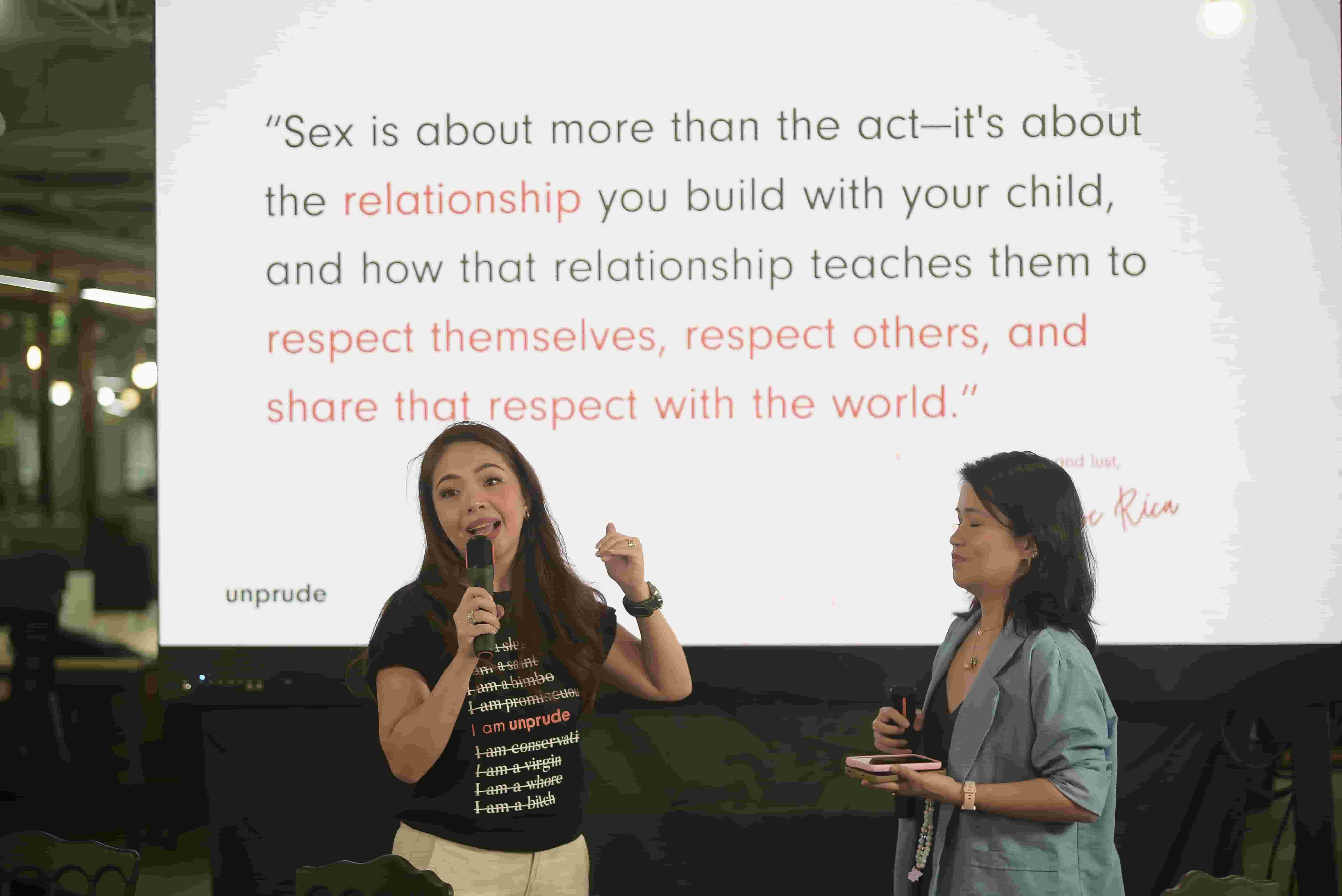
These were just some of the real and raw questions parents asked during the Smart Parenting Village x Unprude workshop at the Summit Media office last February. Event partners include The Creamery Catering, who provided food and refreshments, and Faire.
The event was designed to teach and help parents understand the importance of sex education and, in the process, equip them with the tools to confidently and appropriately talk to their children about sex and relationships.
Dr. Rica Cruz, a member of the Smart Parenting Board of Experts, sex and relationships therapist, educator, broadcaster, founder of Unprude, and Smart Parenting Editor-in-Chief Ronna Bonifacio, led the discussion.
What Parents Asked, and What Dr. Rica Cruz Answered

One of the most valuable parts of the workshop was the open Q&A session. Here are some key takeaways:
(Questions and answers are edited for clarity.)
When watching a movie with the family at may lumabas na intimate scene, tulad ng naghahalikan, or sex scene, what should we do or say to the kids?
Dr. Cruz: Wala, nanonood lang kayo. Huwag na i-trivialize ang kissing or sex scenes. When you ask them to close their eyes or not look, you make them more curious. Pero, mamili din kayo ng mapapanood, hindi naman siguro kayo manonood ng mga R-rated na films with the kids.
If kids react negatively, like saying “Yuck,” tanungin mo—”Bakit yuck?” Kasi, it’s also an opportunity for you to teach them values. The same way na kung merong rape scene, fight scenes—its the same way na you telling them na huwag mo gagawin yan. So when it comes to the intimate scenes, you can explain to them na adults, when they like and love each other, they kiss.
Sometimes, I say, and I think it’s a good foundation for young kids, that it’s normal for moms and dads to kiss because I don’t want younger kids to feel that it’s weird or bad. It’s good for moms and dads to love each other and have a loving and stable relationship. Kaya in this case, kissing is wonderful. This way, meron din silang model of what a loving relationship is.
At what age do kids start na nagiging uncomfortable sila seeing us naked?
Dr. Cruz: Sila mismo ang magsasabi sa inyo. Even when you teach them to wash themselves, you can say, “Mommy is washing you now but, eventually it has to be you next time.” Pare sa susunod, pwedeng siya na ang magwawash at you’ll help nalang.
Kailangan ba ng isang bata ng HPV vaccine kahit na wala pa siyang partner o hindi pa siya sexually active?
Dr. Cruz: Sasagutin ko ito bilang sex educator pero ang mas makakasagot nito ay ang inyong OB-GYN. It’s the same thing as teaching them about sexually transmitted infections and condom use. It’s for preparation and prevention. Hindi ibig sabihin na exposed na sila o pinapayagan na natin sila maging sexually active. Madami rin kasing nagagawa at napre-prevent ang HPV vaccine na ang doktor niyo ang makakasagot. At nine years old kasi, malapit na magkaroon ng period, pwede na mabuntis. So kung may mangyari man, na-prevent niyo ang consequence na pwede siyang magkaroon ng cervical cancer.
How do you explain to others bakit mo pinapabakunahan ng HPV vaccine ang anak mo?
Dr. Cruz: Let’s stick to the science of it. Ang cervical cancer ay isa sa dahilan ng pagkamatay ng madaming kababaihan, so you would want to protect your child. You can tell your child, or even other adults who love your child na: “I’m protecting you [her] para pagtanda mo, hindi mo na iisipin na pwede kang magkaroon ng ganitong uri ng cancer.” Hindi kailangan i-sexualize ang HPV vaccine. HPV is a sexually transmitted infection and what you’re doing is protecting your child.
My daughter caught me and my husband having sex when she was five. So back then ang sinagot namin sa kanya was, “Nagma-massage lang si mama mo.” Now na she’s turning 13, she’s into LokLok, K-dramas, and K-movies, so she sees mga scenes and reels na doon. So sabi niya sa akin, “Akala ko ba mommy nagma-massage lang?” So how do I explain to her without me looking like a bad mother because we lied to her before?
Dr. Cruz: You can actually be honest about it. You can say, “Dati kasi five years old ka palang noon, so paano ko i-explain sayo? So ngayon alam mo na, so kapag gagawin namin, magtatago kami o lumabas ka muna.”
To me, hindi mo kailangan bawiin, hindi mo kailangan magsinungaling. I think she asked you that way because she’s giving you a chance to tell her the correct answer. Take it as a sign and your cue to talk to her about sex, about what happens between a man and a wife. At na kapag may anak na, eh minsan nagtatago.

What if yung anak is around 5 to 9 years old at nahuli kayo, paano i-eexplain sa bata na you’re having sex with your husband or your partner?
Dr. Cruz: Depende kasi paano kayo nahuli, pwede niyo nga sabihin na nag-ma-massage or whatever. Of course, even if alam na niya kung ano ang sex, you’re not going to say, “We’re having sex while you’re asleep.” Because that’s disrespectful sa space niya. Pero kung nahuli talaga kayo in the actual act and walang lusot, you have to talk to them after. You can say, “What we’re doing, we’re having sexual intercourse, which is what parents do, what loving mothers and fathers do.”
“We journey with the kids; we equip them not to control them. We empower our children to make decisions for themselves because they would have to do that as adults. They will need to learn how to decide for themselves, especially when it comes to relationships and sex.”—Dr. Rica Cruz
I want to ask this, just in case na mangyari din sa amin. I have a friend who opened up to me and told me na she caught her son masturbating sa room niya, and she closed the door ng room at hindi sila nag-usap about it at all. Hinintay niya yung husband niya na umuwi at si husband ang kumausap sa anak nila about it. So when I told my husband about it, na dapat siya ang kumausap sa anak namin tungkol sa masturbation or even sex, kasi para father and son conversation, ang sabi niya sa akin is dapat ako daw since ako ang nanay. So mas okay ba talaga na ang kakausap sa kids about sexual education is the same sex parent? Or laging si nanay talaga? Pero how do I talk to my son and explain masturbation to him?
Dr. Cruz: Tama naman na kailangan, meron din perspective coming from you. In that situation, na if mahuli mo siya masturbating, you can leave tissues sa room niya for next time—informally letting him know you know what he’s doing and this is what he’ll need. Then talk to him, tell him na it’s normal, na it’s an urge because it usually is at that age, but it should be done privately. Be careful about how you talk to them because when you say it’s okay to do it whenever you feel the urge, they might think it’s okay even in school or any public area. Linawin na ginagawa siya in private. Also, remind them to be mindful of others who need to use the bathroom at home if they do it there, at magtatagal sila doon.
[Dad] Follow up question, sino between moms and dads ang better na mag-eexplain about masturbation sa sons? Ang kinakatakot ko kasi is baka tanungin niya ako, “Paano mo ginagawa, dad?”
Dr. Cruz: Honestly, possible na tanungin niya because kids are very curious and even frank. Magtatanong talaga sila straight to your face. So pwede mo din sila turuan ng boundaries. You can say, “Okay, I do it whenever I’m alone. Ayaw ko ng kasama. So you do it alone, and we can’t do it together.” You can remind them to wash their hands afterward.
As a dad, I have a question regarding masturbating. Hindi ba parang, we must equip our children with what it is and when to do it. But for parents of daughters, do we still need to equip them about it? Kasi, I’m not sure if it’s a cultural thing for us Pinoys, but parang hindi pa rin ganon ka-accepted sa atin to think na girls masturbate din?
Dr. Cruz: We have to acknowledge na it’s very cultural, na may double standards tayo kung ano ang kaya at pwedeng gawin ng mga lalaki at ng mga babae. When it comes to masturbation or porn, mas madali sabihin sa mga anak nating lalaki na, “Okay, gawin mo yan, pero magtago ka lang.” Pero sa mga anak na babae, makikita mong nanonood ng porn, papasok sa isip mo na, “Hala, bakit mo ginagawa yan? Anong klaseng babae ka? Kailangan i-protect ka.” So kailangan natin i-acknowledge yung double standard at mahirap talaga to see your daughter as someone who can be sexual. But at 14 to 16 years old, they are already curious about these things. It doesn’t mean na they’re having sex. It could mean that they’re experiencing pleasure in their bodies. Kaya isa yun sa mga ituturo natin. Pero hindi mo din naman sasabihin sa kanya na, “Lumarga ka at makipaglaban.” Hindi, diba? Ang pwede niyong gawin is to talk to them coming from your experience as a man. You can tell her: “Uy may nanliligaw or umaaligid ba sa iyo? Kung meron, you have to be careful. Kasi ganito ang mga lalaki, hindi mo alam paano sila mag-isip. And you also have to take care of your body.” Kahit ganon lang.
Now, if you need someone to talk to tungkol dyan, at awkward para sa yo to talk to her, kausapin mo siya at mag-assign kayo ng isa pang adult na they can talk to. Pwedeng kapatid mo, nanay, or tita. But remember to be clear about your intention; you’re trying to protect her by telling her your experiences and giving her a chance to learn more so that they can protect themselves.
Ang narrative na kinalakihan talaga natin is if may sexual experience ang babae, parang used goods ang datin. Pero sa lalaki, it’s a positive thing. But I think yun yung maganda sa ginagawa nating sex education, that as parents, we’re learning and we’re helping to break the double standard na kinalakihan natin. By allowing and teaching our daughters na that sex should be a safe and respectful space that you should choose, we’re aloreading helping break the mentality na dapat walang alam sa sex ang mga babae. Na dapat itago mo sarili mo, na wala kang nararamdaman, na you’re not a sexual being at all.
We have a 6-year-old son, and kinikiskis niya palagi yung penis niya. Paano ko ba sasabihin sa kanya to stop it, do I say na it’s bad? Minsan kasi, yayakapin niya ako habang nakatayo ako and ganun gagawin niya. Hindi ko din masabi sa kanya direcho na bad yun, kasi nga baka wala pa siyang idea sa ginagawa niya?
Dr. Cruz: You can address it by telling your son when he does it again, “Mommy doesn’t want it.” Kasi boundary mo yun as a person. Then you can ask him, “Anong ginagawa mo?” If he says na, “Wala lang, it feels good.” You can then say, “Don’t do it to a person,” Kasi nga, you’re teaching him about respecting other people’s boundaries. Hindi naman kailangan isipin agad na nag-ma-masturbate siya.
From an outsider’s point of view, sexual agad ang masturbation. Pero may scientific studies na in utero masturbation, meaning babies can masturbate while inside the tummy, so nilalaro yung genital area. Is it for pleasure? Pleasure is different as we age, right? Pero hindi din natin matatanggal na it’s sexualized talaga. Pero ang titingnan niyo lang is the behavior: na yung kinikiskis niya yung penis niya sa inyo. Hindi siya sexual, wala siyang mali, pero sasabihin mo lang sa kanya, “Huwag mo gagawin yan sa ibang tao o kahit kay mommy, kasi it’s offensive,” or something like that. You can say, “You are disrespecting boundaries.” Or next time, you can also sternly say, “No,” and ikaw na ang umalis. Be firm with him.
I’m a mom of three girls, aged 17, 11, and 2. Ever since sa eldest ko, I aim to be a smart parent, that’s why I’m here nga. Pero ang pinakamahirap din, habang we aim na maturuan nang maayos ang mga anak natin, yung mga ibang tao na nakapaligid sa kanila, kumokontra sa mga tinuturo o kinikwento ko. Paano ko ba ipapaliwanag sa kanila na I’m doing this for my daughter. Tulad ng sex education, I’m telling and teaching her about it, not for her to do it, but to know all about it.
Dr. Cruz: Sa culture kasi natin, kapag naki-kwento sa mga teens about sex, even mga karanasan ng parents mismo as teenagers, sasabihin ng iba, “Ano ba? Bakit mo kinkwento yan sa anak mo?” Parang natatakot yung iba na kapag kinwento, eh gagawin na nila? Pero para sa akin, kapag kinwento ko, hindi na macucurious yung bata na alamin pa niya in a different way.
Kaya i-explain niyo nalang sa ibang tao, na ito ang gusto mong pagpapalaki sa anak mo. And kung maayos naman ang intention mo sa kinikwento o pinapaliwanag mo about sex sa anak mo, para malaman na niya—to prepare her and inform her. Katulad din ng sinasabi sa science, the more that you’re open to your child about it, the more they will protect themselves and prepare themselves. So explain niyo na dito lang kayo nanggagaling.
Also, remember that there will be people in your life who will not agree with you, will not support you, and will not believe you. Nakakadismaya, lalo na if ka-close niyo. Pero remember din na, even if we disagree or even if they disagree with us, I don’t think everyone has the same values when it comes to how we want our children to understand sex, but that should not prevent us from respecting each other. We should respect how other people want to raise their family. And if it doesn’t harm our family and how we want to raise them, we can continue to have a relationship with them. This is also the mindset that I hope we can impart to our kids as parents.
I have a 15-year-old daughter, and I’m trying to be open with her. I know na she’s aware of sexual topics, but every time I open up and talk to her about it, lagi niyang sasabihin, “Kadiri.” Pero na-kwento din niya sa akin na yung classmate niya may dalang vibrator, so parang she’s open naman with me about certain topics. So, how do I get her to open up to me?
Dr. Cruz: Usually, nahihiya din talaga ang mga anak natin, syempre, ayaw nila sabihin outright sa mga magulang nila na curious sila about it. Pero, yung pagsabi niya sayo na, “Uy mommy, yung kaklase ko may dalang vibrator,” that’s her way of opening up and starting the conversation. So you can explain to her what it is, then see anong isasagot niya. At kapag sinabi nga niya na, “Kadiri,” you can ask her anong kadiri doon.
Or if nag-explain ka and sinabi niya outright na ayaw niyang pag-usapan, you can say, “Okay, basta ito lang yung akin…” You’re still giving her the information but letting her process it on her own. But if you think about it, she’s open with you if she tells you that kind of information. Usually kids that age kasi natatakot magkwento dahil napapagalitan na sila agad o nahuhusgahan na agad.
"So, we parent them in such a way that we know that they will be comfortable with the answers we’ve given them and that there is integrity in how we have told them about sex, relationships, and respect."—Dr. Rica Cruz
This is about my niece, nahuli siya ng parents niya na nag-send ng nude photos sa lalake sa messenger. Nung nahuli siya, nasaktan siya ng daddy niya. So my question is, paano ba dapat ang gagawin if mahuli mo ang anak mo na nagsesend ng nude photos sa social media?
Dr. Cruz: Una, we have to talk about the part na nasaktan ang niece mo ng daddy niya, dahil marami itong messages na nabigay sa kanya na pwede niyang dalhin sa paglaki niya. Tulad ng: Na anong klaseng tao ako? Hindi ba ako mamahalin dahil ginawa ko ito? When a person experiences a big trauma related to anything sexual, they can either be super celibate—meaning hanggang pagtanda, mahihirapan na sila to have sex even if they’re in a loving relationship. Or they can be hypersexual. So I hope na both the dad and his daughter go to therapy, and that they both apologize to each other—for both of them to understand where they are coming from.
The dad hurt her daughter kasi from his perspective, galit siya dahil hindi yun dapat ginawa ng anak niya. Pero bilang magulang, kailangan din natin intindihin, bakit nagagawa ng mga anak natin ang isang bagay. What made her send her nudes to men or other people? What was her motivation? Usually sa batang edad, ang motivation ay validation: I need someone to see me. I need someone to pay attention to me. I need someone to tell me that they love me.
Sa situation na ganyan, use it as an opportunity. Nalaman mo na anong ginagawa niya, so ask her: Bakit mo siya nagawa? Don’t push her further away.
Another thing is that I think, as parents, we need to avoid making it about our feelings and ourselves. In that instance, the dad acted on how he felt. We need to prevent that as parents when we talk to our children about their curiosities, crushes, and relationships. Always remember na it’s not about me. It’s about my child, my child’s experiences—yung crush niya, yung problema niya. Huwag mo ipapasok yung sarili mo at problema mo, because that makes it worse and confusing. It’s about your child.
Equip, Don’t Control
At the end of the session, Dr. Cruz reminded parents:
“We journey with the kids; we equip them not to control them. We empower our children to make decisions for themselves because they would have to do that as adults. They will need to learn how to decide for themselves, especially when it comes to relationships and sex.”
“It is also said that your kids will discover who you are one day. You can say a lot of things, but one day, they’re gonna grow up and know who you really are. So, we parent them in such a way that we know that they will be comfortable with the answers we’ve given them and that there is integrity in how we have told them about sex, relationships, and respect. Sex is not just sex, and sex education might be one aspect of our parenting, a very important one, but we should approach it with the same attitude we have when we raise our kids—that we teach them to think on their own so that they can decide for themselves later on.”
Faire, the newest Thai condom brand in the country, is one of Smart Parenting’s partners for the event—highlighting that condoms are key to staying safe while enjoying pleasure.
Parents share how they talked to their kids about sex.
What other parents are reading

Lorem ipsum dolor sit amet, consectetur adipisicing elit, sed do eiusmod
Lorem ipsum dolor sit amet, consectetur adipisicing elit, sed do eiusmod
