
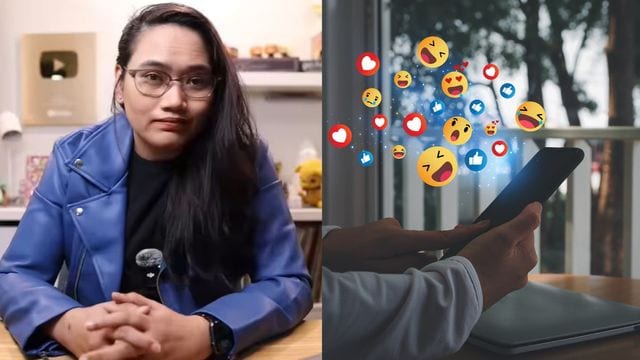
Educational content creator and psychometrician Lyqa Maravilla urges teachers to refrain from posting photos and videos of their students online, particularly minors.
In a 7-minute video shared on Facebook and TikTok, Maravilla, also known as Ate Lyqa, elaborated on the importance of this reminder. She expressed concern over the increasing number of videos featuring students' faces being circulated online, which could potentially expose them to risks such as cyberbullying and harassment.
Maravilla, who is a licensed professional teacher herself, wrote in the caption, "I'm sure maraming magagalit sa akin dahil dito, but I believe this has to be said. I also believe that teachers who have their learners' best interest at heart would understand."
She clarified that she's not only pertaining to the teacher who livestreamed her sermon to her class; it's more for the teachers who are still unaware that posting videos showing their students online is prohibited under Republic Act 10173 or the Data Privacy Act of 2012.
Maravilla challenged teachers, "Hindi niyo ba alam na kailangan may signed consent niya ng parents bago niyo ipakita? And I mean, a written consent form. Signed, hindi by the kid kasi minors cannot consent, but their legal guardian or parent. Do you have one of these for each student that you post on your TikTok?"
Content creator explains why teachers post students online
Maravilla cited reasons teacher would usually give for posting videos that include their students on their social media accounts.
"Pero yung mga bata naman po ang may gusto eh," is not a valid reason, she says, as students cannot give consent.
"Pero positive naman yung content," is also not enough, as well as "Pag kumita naman ako, sa kanila ko naman binibigay eh," because this is exactly what child exploitation means, she stressed.
Maravilla explained, "Ginagamit mo yung bata para may makuha ka in return. At kahit binibigay mo pa yun sa bata, that doesn't make it right. Kasi hindi lang naman pera ang pinag-uusapan dito eh. May mga intangibles pa dyan. Hindi lang pera ang nakukuha mo. Nakakakuha ka ng fame. Nakakakuha ka ng leverage."
Another excuse would be, "Marami rin vloggers na gumagawa nito eh." To which Maravilla said, "Mali rin sila. Pero iba kasi pag teachers, dahil sila yung in-charge supposedly sa welfare ng mga bata, 'di ba? Trabaho ng teacher na protektahan 'yung mga estudyante nila."
Lyqa Maravilla explains consequences of posting students online
She cited examples of videos she had seen online posted by teachers and their implications, warning about online predators. One was a male teacher who shared a video of his female student, and even added a romantic background music on it.
"The moment na pinost niya yun sa TikTok, exposed na yung bata na yun sa lahat ng klase ng comments, sa lahat ng klase ng malisyosong tingin, sa lahat ng pagkakataong i-screenshot yun, o dinownload ng mga tao na bastos ang pagtingin sa bata na yun."
She underscores, this doesn't only happen to female students. Even when teachers post seemingly harmless dancing videos of their students, it can lead to cyberbullying and harrassment. Some of the comments, she said, are simply the online version of cat-calling, which is also punishable by law.
Maravilla traces back to the reason why teachers would post their students' videos. "I think the obvious answer ay kasi these videos tend to do well. Pag may batang sumasayaw, pag cute, pag pogi, marami nagko-comment, marami nag-react, pipick-upin ng algorithm, dadami ang views. And I'm very familiar with that dopamine hit, yung dopamine rush, kapag nagviral yung video mo. But sana nagva-viral ka for the right reasons, 'di ba?"
What can parents do to keep kids from being posted by teachers on social media
One way that Maravilla thinks would make teachers stop from sharing their students' videos on social media is by empowering parents.
Sign a 'Declined consent' form.
Maravilla shared a link to a form where it states that the parent declines consent for photographs, videos, and audio recording of a minor. Once filled out and signed, a parent can furnish this to the school, or directly to their child's teachers. You can download a copy of the form here.
What teachers should consider before posting on social media
Common Sense Education shared some pointers for teachers before posting anything on social media to keep their students and themselves safe online. Here are three questions teachers may ask themselves before posting:
- Is there anything in this post that personally identifies me or my students?
- Do I have explicit permission to post it?
- Is what I'm posting furthering the learning of my students or other learners?
It also advises teachers to think twice about sharing any picture or video that they take, and to discern what they have recorded to see if there are any details that would give away private information about their students.
Some details that teachers should take note before posting include are the faces and names of students whose parents haven't given explicit consent for sharing, addresses, birth dates, phone numbers, and other relevant information that would give away their location or identity, as well as grades, assessments, or any part of a student's educational records.
Teachers should serve as models for students to be responsible digital citizens. This includes teaching them to engage in healthy and positive interactions online, and raising awareness on common online scams or toxic behavior.
As of writing, Maravilla's videos has garnered over 3.4 million views on Facebook and TikTok combined. She knew that posting the video would trigger negative comments. However, she affirmed, "So yeah, magalit ng magagalit. Hindi kayo yung priority ko—ang mga bata."
Read how parents can teach their children to be responsible digital citizens here.
More from sp

Lorem ipsum dolor sit amet, consectetur adipisicing elit, sed do eiusmod
Lorem ipsum dolor sit amet, consectetur adipisicing elit, sed do eiusmod
