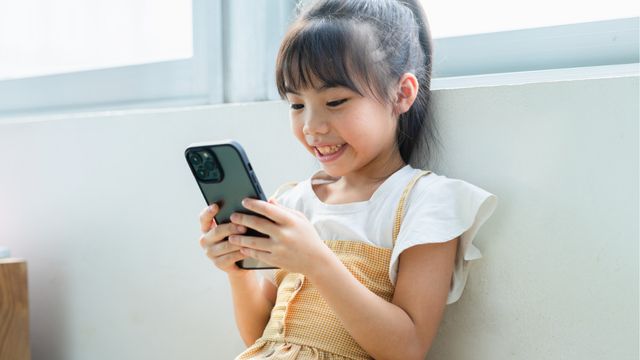
According to a statistics portal for data gathering and research, a survey on online activities of Philippine children reveals that 92 percent of respondents who utilize social media weekly were those aged 12 to 15 years. The same survey showed that the majority of respondents utilized the internet from their own homes.
In a report done by Statics.com, there are about 76 million Facebook users (as of February 2022) and an average of 10.27 hours accessing the internet on various devices during the third quarter of 2021. Data Reportal states that as of January 2024, our country has 86.75 million social media users, equivalent to 73.4 percent of the total population.
Due to the pandemic and forced lockdown, majority of children in the Philippines resorted to the use of digital communication, whether for academic purposes or personal messaging. According to a 2021 local news feature, a cybersecurity firm's data showed that 43.09% of Filipino children went online for social media messaging. The same data revealed that 34.75% of Filipino children are into watching videos and listening to music while only 14.37% are into playing computer games.
A 2020 report from Unicef, Philippines Kids Online (The Online Experiences of Children in the Philippines: Opportunities, Risks and Barriers), discloses the age at which children in the Philippines first go online is 10 years old on average and that they spend under two hours a day online.
The same report reveals Filipino children's most used online applications: Facebook hits the top spot, followed by YouTube, then Instagram, and lastly, Twitter. This “broadly reflects trends elsewhere in the region, where Facebook is almost ubiquitous amongst children who go online. More girls than boys in the Philippines report using Facebook and Instagram. Nine out of ten girls use Facebook, compared to eight out of ten boys, while one in five girls use Instagram compared to a little over one in ten boys.”
But while most children use social media and other online platforms for school activities, virtual connections, and self-expression, its vast reach and endless possibilities can expose our kids to immense risk and danger.
How does a parent empower his/her child to use social media responsibly?
Dangers of Social Media Use
It has long been established that prolonged screen time has effects on our children, but what other perils should parents be vigilant of, in terms of social media use?
Stranger Danger
The concept of “stranger danger” is deemed to be more relevant online since the stranger whom children might encounter online might be a sexual predator who preys upon young children and lures their juvenile minds. The potential risk and danger that children might encounter speaking to a stranger online still governs many of the fears that adults have regarding children’s online safety.
The UNICEF report details, “Eight out of one hundred children interact regularly with someone they met online who falls outside of any of their community, when playing games; six in one hundred interact regularly with someone they first met online via a social network site or app.”
Breach of privacy
The Unicef report shows that the majority of children show their face on their profile, including full body photos and many show their addresses. To add, “One in ten children accept friend requests from anyone, whether known to them, their friends or family. These people could be absolute strangers to the child. Children are more likely to accept friend requests from someone if they have some friends in common, with almost one in five children reporting they would usually accept such request, while one in three children report that they usually only accept friend request if they know the person making the requests. Only one in 100 children block strangers when they receive friend or contact requests from them.”
Multiple social media accounts
While having multiple social media accounts in a single platform does not automatically equate to harm, what parents know about these accounts, including access, is where the risk lies. Children might be connecting to someone they don’t know outside of the accounts that parents know of and have access to. The Unicef report describes, “ Where parents or caregivers may feel that they are aware of what their children are doing online through friending them on Facebook for example, this may create a false sense of security should the child have another private account of which their parents are unaware.”
(Editor's note: Smart Parenting understands the various reasons parents may choose to allow or create social media accounts for their children to use, however, it still believes in observing the age limits social media apps set for its users.)
Unrestricted access
Ads, pop-ups, links: children may be unaware that clicking these would lead them to sites with adult content or age-inappropriate material. The Unicef report shows that “More than one in five children also reported ending up on websites without knowing how they got there.”
Meeting someone offline
The UNICEF report details harrowing facts: “One in seven children have also at least once met someone offline they first got to know online over the past year,” and “two in five children met with someone they first met online who was totally unknown to them or anyone they know, and a similar percentage of children personally met with someone older than them.” This is probably the most dangerous among all the risks involved in social media use.
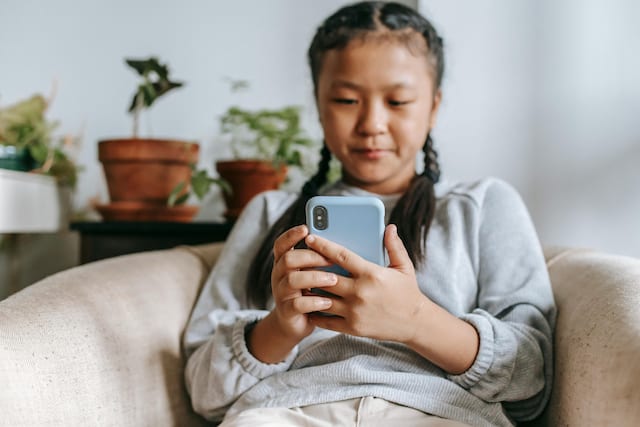
As parents, how do we empower children with responsible social media use?
In a digital age where connections and self-expression inevitably expands its reach to a virtual environment, how do we keep up with technology without jeopardizing our kids’ safety?
Tips for parents on kids' responsible social media use
Educate them.
Educate kids about the importance of protecting their personal information and the risks of sharing too much online. Explain how to use privacy settings effectively or why you must set privacy settings on their social media accounts. Teach them to be cautious of accepting friend requests and clicking links that may lead them to age-inappropriate sites.
Talk to them about scammers, “stranger danger,” and possible repercussions of communicating with someone they do not know personally. Tell them about the risks of meeting someone offline and provide possible scenarios that they could encounter should they meet with someone they barely know. Empowering our children with knowledge can sometimes keep curiosity at bay.
If a child is not aware of the risks, he/she would most likely want to figure them out on his/her own.
Talk about mindful usage.
While some kids feel more comfortable expressing themselves online rather than face-to-face social interaction, make them aware that not all people will appreciate their posts. Cyberbullying and hate speech are not uncommon on online platforms. Teach them to balance their social media use to avoid negative impacts on mental health.
Have them think before posting.
Enlighten your children about how their content or social media posts might be perceived by others. They should be careful of words that might offend others or put them in a position as a target of cyberbullying. Ask them to consider the potential impact of their posts. Again, inculcate in them the importance of avoiding sharing sensitive personal information, especially if the post is shared to the public. Advise them not to share information or links that they are not sure about.
Set boundaries.
Establish healthy boundaries with your child regarding social media use. Allocate specific times for checking social media to refrain from excessive usage that can lead to addiction. Advise them to use social media platforms to support and uplift others; to engage in positive and constructive conversations. Let them know of their limits in terms of self-expression and to always be respectful in their language and action.
Secure accounts.
Use privacy settings and reporting tools to secure their accounts. Ask them to use strong, unique passwords for each of their social media accounts. You may also consider enabling two-factor authentication (2FA) to add an extra layer of security.
What to do if your child asks if he can join social media apps? Find a guide here.
More from sp

Lorem ipsum dolor sit amet, consectetur adipisicing elit, sed do eiusmod
Lorem ipsum dolor sit amet, consectetur adipisicing elit, sed do eiusmod