
If you've watched the Netflix series Adolescence, you're likely reevaluating your parenting approach or thinking of the best ways to safeguard your children.
If you haven't watched it, the four-part series revolves around Jamie Miller (played by Owen Cooper), a 13-year-old boy accused of a heinous crime. One of the motives presented was that Jamie was a victim of cyberbullying.
Parents in the Smart Parenting Village Facebook group who have seen the series say they are looking for ways to limit their teen children's access to screen time and social media use, as excessive exposure can take a toll on their mental health.
Parental concerns over screen time and social media use
Ericka Mercado, a mom of two based in Canada, shared with Smart Parenting that watching Adolescence validated the rules she and her husband established at home. She acknowledges that as her children grow up, she won't be able to control their online exposure entirely, but delaying it as much as possible gives her peace of mind.
"Hindi siya masayang conversation palagi, kasi may feeling din ako as a parent na, dahil ba sa decision namin, naleleft out ba yung anak ko? But because of this show, we realized it's a good decision that we're delaying it as much as we can and hanggang maging appropriate siya for them. Closely monitoring talaga and explaining to them why, are important," she said.
Phone policies in schools
In some private and public schools in Metro Manila, bringing a phone to school is highly discouraged. However, when students in higher levels insist—which, according to teachers, is very common—schools ensure that students do not use their phones during class hours.
A public high school teacher in Parañaque shared that if they see a student using their phone during class, they confiscate it and return it only during dismissal. In a private school in Quezon City, a director stated that grade school students cannot bring phones unless their teacher requires them for research purposes. She observed that, most, if not all, students in their school use smartphones.
The case for phone-free schools
In South Australia, a recent report by its Education Department revealed promising results after the first year of implementing "phone-free schools." These schools require students to stow away their phones from the first school bell until the final bell. Students aren't also allowed to use their phones even during breaks.
Social psychologist Jonathan Haidt shared that the implementers saw "increased focus in class and far more socialization during breaks." It also shows that children get healthy interactions with their peers after turning phone-free rather than "the cheap, stress-inducing dopamine cycles of internet drama."
Haidt, the author of The Anxious Generation, explores the adverse effects of giving smartphones to children. In his book, he laid out four key reforms or "new norms" that can help children develop healthier, phone-free childhood:
- No smartphones before high school (parents can give basic phones, flip phones, and smartwatches instead);
- No social media before age 16;
- Phone-free schools; and
- More independence, free play, and responsibility in the real world.
The mental health crisis among teens
Haidt examined adolescent mental health trends and found evidence that there is a global mental health crisis among the youth. It began in the early 2010s, with U.S. teens aged 12 to 17 reporting at least one major depressive episode in the past year. Suicide rates today are higher for adolescent girls than ever before, especially among Generation Z or those born between 1997 and 2012.
One factor explored in The Anxious Generation is the decline of "play-based childhoods." This trend began in the late 1970s when parents became more fearful and overprotective of their children. By the 1990s, the situation worsened as parents started supervising their children more, leading to less time spent playing with peers.
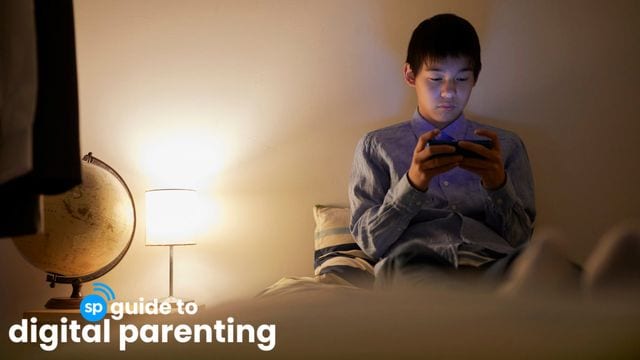
Instead of engaging in play, children now turn to smartphones and social media, further keeping them inside their rooms with their eyes glued to screens. Haidt argues that whether or not smartphones directly cause the mental health crisis, implementing these four reforms will benefit children. "What irreversible harm will be done to children who spend more time listening to their teachers during class, more time playing and exploring together outdoors, and less time sitting alone hunched over a device?" Haidt said.
Are dumb phones the solution?
Earlier this month, Smart Parenting published an article about why more parents are switching to dumb phones for their kids rather than smartphones. Many parents expressed interest, but the question remains: Are dumb phones really safe?
We asked Jayvee Fernandez, a dad of two and the technology editor of The Philippine Star (PhilSTAR Tech), for his insights on dumb phones and their security and privacy risks.
"There's been a renewed interest in legacy technology—the ones that we grew up in the '90s and early 2000s. Who knew that the awkward phase of technology would make a comeback, especially in the age of social media? These 'dumb phones,' which can only send SMS and make calls, maybe refurbished Nokia units or 2G phones made in China that you can buy on e-commerce platforms," Fernandez said.
He continued, "It’s relatively safe to use these [dumb] phones save for the fact that sometimes telecommunications companies (telcos) recycle prepaid numbers. SMS spoofing presents a mild concern, but that would mean your family is deliberately targeted and observed in school."
"At the end of the day, we [parents] are directly responsible for our children and their safety." —Jayvee Fernandez, tech editor and dad of two
SMS spoofing is a technique for sending text messages with fake sender IDs, making it appear like the messages came from a trusted source. Cybercriminals use software to create fake identities to trick their victims into sending money or disclosing personal information.
Some parents whose teens already have smartphones have successfully convinced their kids to switch to dumb phones. However, if this isn't an option, Fernandez suggests that parents can make smartphones as "dumb" as possible by using parental control apps like Google’s Family Link.
He also shared another tip, "Setting up a Google account specifically for a child can allow you full parental control over their digital life. You can do this after a hard reset on any Android phone when it asks, "Who will be using this phone?"
Telcos like Smart recently launched a postpaid plan designed for parents and children, which offers unlimited access to only a curated suite of kid-friendly apps. It also has a Child Protection Platform, which helps block access to inappropriate content. Among the kid-friendly apps included are Khan Academy, Messenger Kids, YouTube Kids, and Mobile Legends Bang-Bang.
However, for parents who are serious about limiting their child's online access, Fernandez recommends alternatives, such as Xiaomi's Smart Watch for Kids. This smartwatch features built-in filters that allow only vetted contacts to call and text.
Keeping kids safe in the digital age
In the end, Fernandez reminds parents that they play a crucial role in ensuring their children's safety—online and offline.
"At the end of the day, we are directly responsible for our children and their safety. It is really up to us to educate our children and find out the different security measures in school to keep them safe," he said.
He also emphasized the importance of making children aware of phone use policies at school and home.
"Educating your child with who to trust is also of utmost importance. These types of conversations may be inconvenient but also warranted to avoid untoward incidences," he concluded.
As technology evolves, parents need guidance on how to balance safety, independence, and digital exposure. While delaying smartphone access or switching to dumb phones aren't one-size-fits-all solutions, the intention sparks crucial conversations about responsible tech use. More than limiting screen time and social media access, every parent's goal should be to foster healthy relationships, critical thinking, and confidence. By setting clear boundaries and with careful guidance, parents can help children navigate the digital world safely.
We dare imagine—what if the Philippines banned children 16 years old and below from using social media? Read the first of the two-part series here.
More from sp

Lorem ipsum dolor sit amet, consectetur adipisicing elit, sed do eiusmod
Lorem ipsum dolor sit amet, consectetur adipisicing elit, sed do eiusmod
