
The following article is for educational and informational purposes only. Do not use the information as a replacement for medical advice. It is important to consult a doctor to seek medical advice for your health concerns.
Water birth is the process of delivering a baby while being submerged in water, a familiar environment that mirrors the womb. This childbirth method has gained popularity for providing a relaxed labor. As more couples explore natural birthing options, water birth emerges as an appealing choice. But what else is there to water birth, and why are many expectant mothers opting for this method?
READ ALSO: Is Water Birth A Safer Alternative For Pregnant Women During A Pandemic?
What is water birth?
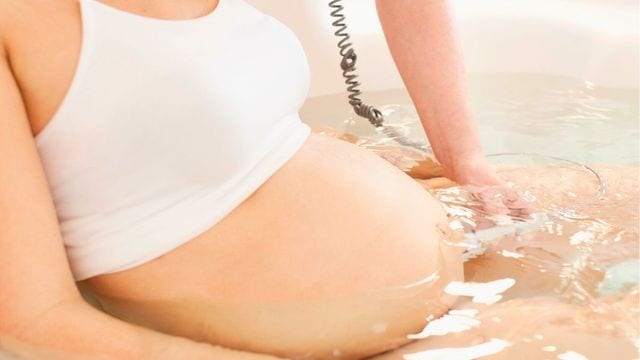
Water birth involves labor and delivery that occurs in a tub or pool filled with warm water. Expectant moms can opt to do it in a hospital or at home.
Throughout history, water has been utilized in various forms, such as warm baths, herbal baths, and birthing pools, to alleviate the pain of a mother during labor and delivery.
Thus, this childbirth method is favored for its benefit of providing natural pain relief and promoting relaxation. It is also based on the idea that the buoyancy of the water supports the mother's weight, allowing her to move more freely and find comfortable positions during labor.
Water birth in the Philippines
While still considered an unpopular choice compared to traditional hospital deliveries, water birth has captured the interest of some Filipino expectant parents seeking a natural approach to childbirth. Filipino celebrity moms like Coleen Garcia, Max Collins, and Katarina Rodriguez have also openly shared their experiences and positive endorsements of water birth.
Benefits of water birth
One of the primary benefits of water birth is natural pain relief. The American College of Obstetricians and Gynecologists (ACOG), cites that water immersion may help reduce stress and improve a birthing mother's sense of control. To reiterate, the buoyancy and warmth of the water help relax muscles and ease contractions, which can significantly reduce the pain experienced during labor.
For the baby, the warm water environment is thought to mimic the amniotic fluid, providing a gentle transition from the womb to the outside world.
Overall, water birth can enhance feelings of empowerment and control for the mother while offering a soothing environment for the baby's arrival.
Risks of water birth
Despite its benefits, water birth also has some potential drawbacks. A primary concern is the risk of infection, as the birthing pool must be thoroughly cleaned to prevent bacterial contamination.
Water births may not be suitable for high-risk pregnancies, including cases with complications such as preterm labor, breech position, or preeclampsia.
The American Journal of Obstetrics and Gynecology also reported concerns regarding potential "adverse maternal and neonatal outcomes" associated with water births, including issues like umbilical cord avulsion or perineal lacerations.
Moreover, not all hospitals and birthing centers offer water birth facilities, and home water births require careful planning and support from a qualified midwife or healthcare provider.
Is water birth for you?
Every pregnancy is different, so expectant mothers must make their own informed decision about whether a water birth is right for them.
If you are considering a water birth, however, the first step is to consult your healthcare provider to discuss your health history, pregnancy conditions, and any potential complications that might make a water birth unsuitable.
Next, evaluate your personal preferences for pain management and the labor environment. If you favor natural pain relief and a calming, less clinical setting, a water birth might be appealing due to its benefit of natural pain relief and stress reduction. Additionally, ensure that your chosen hospital, birthing center, or home setup is equipped with resources for a safe water birth.
Read this mom's personal story about her water birth experience here.
What other parents are reading

Lorem ipsum dolor sit amet, consectetur adipisicing elit, sed do eiusmod
Lorem ipsum dolor sit amet, consectetur adipisicing elit, sed do eiusmod
