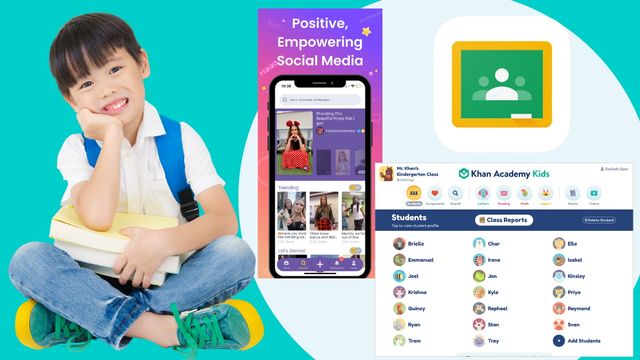
There is no stopping social media.
Teens and tweens are living in a digital era with 24/7 access to the online universe: sharing, relating, collaborating, exploring, learning, and pushing the envelope of technological connectivity–all the good and the bad combined.
Social media platforms have created virtual communities for our teen children to create, like, share, and exchange information, ideas, content, and networks.
What are social media platforms?
Social media platforms are digital tools that facilitate interaction through user-generated content such as photos, videos, text posts, comments, vlogs, and even links to other online content. In general, 13 is the minimum age to create and have access to most social media sites.
According to global digital trends of a media monitoring platform called meltwater.com, “The Filipino people are highly reliant on social media to maintain relationships with their loved ones, as 67.7% of all Filipino social media users use social media to keep in touch with friends and family.”
Top spots for favorite social media platforms in the country are Facebook, Facebook messenger, TikTok, Instagram and X (used to be Twitter). Data collected between July to September 2023 reveals that most of the time spent on social media apps are spent on watching TikTok and Youtube videos.
With social media platforms gaining more popularity amongst our teens, how concerned should we be in terms of its impact on our children’s education?
Pros and cons: How social media platforms affect education
Social media platforms play a significant role in education, with its positive and negative facets. Here are some ways they influence educational experiences:
Pros of social media platforms
Improved means of communication and Interactive learning
Platforms like Google Classroom and Edredo allow students to connect virtually and collaborate on projects and assignments, while fostering teamwork and peer learning. Through these platforms, they can quickly share ideas and information using computer technology.
Access to Resources and Information
Platforms like YouTube and Khan Academy offer a wide range of educational content, videos, and tutorials on diverse subjects, making learning accessible anytime, anywhere. Through messaging apps, children are able to share links and files that they can use as resource for their homeworks and projects.
Research and Information Sharing
Social media allows students to follow educational institutions, listen to subject-matter experts, and learn from specialists-turned-content-creators to stay updated with the latest research and developments on a vast array of subjects.
Engagement, Motivation, and Critical Thinking
Social media, with its ease of usage and accessibility, helps keep our children entertained. Extending conversations outside the classroom through online connectivity stimulates them to collaborate more.
Navigating social media also helps students develop critical thinking skills as they learn to evaluate the credibility of sources and discern misinformation, digital etiquette, and what seems to be “fake news” or illegitimate content.
Cons of social media platforms
Distraction and ineffective time management
Social media can be a significant distraction, especially if the topics are not related to learning like spreading gossip or circulating rumors. This kind of distraction can lead to ineffective time management making students procrastinate on their studies and assignments. Constant notification alerts as well as the addictive nature of social media can reduce students’ ability to focus on more important tasks.
Cyberbullying and poor self image
The anonymity of social media, particularly with dummy accounts, can lead to bullying, bashing, and harassment, which could negatively affect the students’ mental health, ability to sleep undisturbed, and overall well-being.
Moreover, exposure to idealized representations of peers can lead to poor self-image with feelings of inadequacy and anxiety–and sadly, at certain levels, even depression.

Privacy risks and ‘fake news’
Sharing personal information on social media can expose students to privacy risks and security concerns. Parents also need to help children understand the impact of their "digital footprint" that can potentially impact future reputations. Preadolescents and adolescents may lack an awareness of privacy issues and post inappropriate or vulgar texts, pictures, and videos without realizing that these stay online permanently and may affect future school and job applications.
Meanwhile, social media could also be an avenue of misinformation which may facilitate the rapid spread of false details and figures, which could confuse students and hinder their learning.
Social media for education
Popular social media platforms such as Facebook and YouTube may work well with your children in terms of connecting, exchanging ideas, and sharing information over links, attachments, vlogs, and videos. However, the environment for such social media platforms needs to be controlled in terms of privacy, content, and other settings such as parental controls so students can leverage and optimize learning whilst minimizing distraction and poor time management.
Meanwhile, below are learning platforms that have social media functions where students can interact, collaborate, exchange information, and learn at the same time.
What social media apps and platforms your teens can use for school?
1. Microsoft Teams for Education
Through Microsoft Teams for Education, students and educators can submit, save, and extract information from handwritten notes and assignments with Office Lens. For enhanced interactions, students can be divided into smaller breakout rooms for ice breakers, exam prep, discussions, or group work. Teachers may use the Assignments and Grades feature to assign tasks, quizzes, and grading rubrics, as well as track individual and class-wide achievements over time. Educators can also support students’ emotional and social well-being by providing a safe space to navigate feelings through Feelings Monster that promotes social-emotional learning through games like Kahoot!
According to its site, Microsoft Teams for Education, with built-in AI tools, is “a powerful communication app for schools that enhances collaboration and learning. It integrates everyone and everything in one place, and it’s free for students and teachers of all grade levels with a valid email address.”
2. Zigazoo
According to their site, Zigazoo was “founded by parents and teachers who understand the concerns that caregivers have about social media for their kids and also the strong desire that kids have to engage with social media. Zigazoo is carefully designed to build confidence and promote diverse perspectives and self expression.”
Zigazoo works closely with their users and their families to ensure that Zigazoo kids are getting the best that social media has to offer. Although meant for younger audience, Zigazoo can also be used by teens and tweens as an outlet to nurture creativity and build authentic relationships with their peers. There’s no bullying, no commenting, no messaging, and no doom scrolling, but they do offer fun stickers and shout-outs for kids to express themselves when responding to uploaded videos. Educators can also use Zigazoo to create classrooms or private groups.
3. Edredo
Edredo is a popular alternative to Edmodo, which before it closed down was a social networking site (similar to Facebook) intended for teachers and students. It was a learning platform that provided “a secure and easy environment where pupils can share their content, and access several activities, evaluations, and notices. Users can send and receive messages, discuss on forums, and share digital resources such as videos, audio or images.” With Edredo offering additional enhancements and features tailored to modern educational needs, it makes itself a true successor to Edmodo.
With Edredo, students can take classes and hold real-time interactive sessions. Additionally, educators can choose among different content formats to deliver the learning content most efficiently and easily add or remove students, create and manage groups, and even assign roles and permissions.
4. Google Classroom
One has to have a Google account to log in. Google Classroom is a free education platform with functions similar to social media platforms which enables teachers to interact with students and share educational materials easily. It is also a “cutting-edge online learning management system designed by Google” wherein the primary objective is to simplify the sharing and delivery of learning resources, including course materials, assignments, surveys, and documents.
5. Khan Academy
Khan Academy is a learning platform with a vast global community that empowers learners to study at their own pace, both in and out of the classroom, through its practice exercises, instructional videos, and a personalized learning dashboard. It has several specialists covering Math, Physical Sciences, Health and Medicine, Art and History, and Humanities. It also has a powered AI tool called Khanmigo, described as your study buddy, tutor, homework helper, debate partner, and more.
How do you empower your kids with responsible social media use? Read here.
More from sp

Lorem ipsum dolor sit amet, consectetur adipisicing elit, sed do eiusmod
Lorem ipsum dolor sit amet, consectetur adipisicing elit, sed do eiusmod