‘I Didn’t Know How Much I Wanted A Baby Until I Lost It’
My reluctance led to my biggest heartbreak.
Published on Oct 16, 2026
October 15 is Pregnancy and Infant Loss Remembrance Day, observed annually to honor and remember babies lost to miscarriage, stillbirth, ectopic pregnancy, sudden infant death syndrome (SIDS), and newborn death. October is also recognized as Pregnancy and Infant Loss Awareness Month. This article is part of Smart Parenting’s two-part feature commemorating Pregnancy and Infant Loss Remembrance Day.
Content Alert: This article contains discussions of miscarriage and stillbirth.
We lost our baby at 8 weeks, 5 days.
The pregnancy came as a surprise. For more than a decade, I thought I would have a hard time getting pregnant, as I was diagnosed with PCOS (now more aptly called Polyendocrine Metabolic Ovarian Syndrome or PMOS) in my early twenties. And even after marriage, I wasn’t sure I was mentally, physically, and financially ready to raise a child (although my husband, Albert, sure was).
After experiencing two health scares, however, I found myself crying, with a sudden realization that I did want a baby. So, I finally went off birth control pills, and my husband and I decided to try conceiving. But we never expected we would get pregnant within six months of stopping contraception.
Two Positive Lines
.jpg)
Because of my PMOS, I was used to having delayed periods. I chalked up the delay to our recent travel abroad and because I stopped taking my pills. But after two weeks—and some thought—I asked my husband to buy a pregnancy kit just in case.
The next day, I decided to take the test. When I saw the results, I couldn’t help but laugh. At the very least, I thought it would show a faint positive line. But within seconds, two lines appeared, as clear and dark as they could be. My husband and I couldn’t believe it. Was it finally our time to become parents?
We didn’t waste time, and I visited my OB-GYN right away. Since she is also a sonologist, she decided to do a transvaginal ultrasound to check if we could already see a gestational sac. There was none. Based on my last menstrual period, I should have already been at 6 weeks, but she explained that I might have ovulated late since my menstrual cycles are longer than normal. She ordered an hCG blood test to confirm the pregnancy and check whether it was viable, and told me to come back for another ultrasound after two weeks.
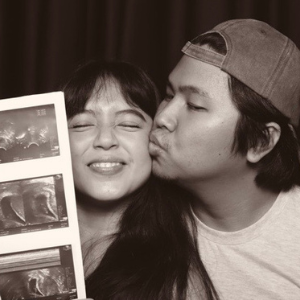
Pregnancy Loss Taught This Couple That Joy Can Co-Exist With Grief
Grief looks different for everyone, and there are no rules to healing.
READ HEREThose two weeks felt like forever. My husband and I tried our best to act normal, but deep inside we were a mixed bag of emotions. We were excited at the possibility of finally being mom and dad, but also nervous about the changes it would bring.
Two weeks later, we went back to the doctor. My rising hCG levels indicated a pregnancy, and during the ultrasound, I immediately noticed something was different. A sac was in my uterus. My baby was there. I was pregnant.
Based on its size, my doctor calculated my gestational age at 6 weeks. And then she surprised us by asking, “Do you want to hear the heartbeat?”
Hearing our baby’s strong heartbeat made us cry happy tears. It suddenly made everything real, and for the first time in two weeks, we finally allowed ourselves to embrace the fact that we were going to be parents—“smart parents,” I chided my husband, since I was a former Smart Parenting editor.
Short and Bittersweet Pregnancy
While we were excited about this new addition, we wanted to keep the pregnancy to ourselves for the time being and surprise family and friends after the first trimester. I knew the first three months would be delicate, so I wanted to take it one day at a time, stay healthy, and really relish this time with my baby.
Now that my baby’s presence was confirmed, my pregnancy symptoms also made themselves known. My heightened sense of smell made me nauseous, especially when outdoors, and I was tired all the time. Luckily, I’m a freelancer, so I could go to sleep whenever I wanted. I also experienced some cramping, so my doctor prescribed a ‘pampakapit,’ even though I wasn’t spotting or bleeding.
At 8 weeks, we went back to my OB-GYN for a routine checkup. During the ultrasound, I was initially happy because I could see our baby had grown in size. I even pointed it out to my husband, who was in the room with me. But my doctor was unusually quiet, and somehow I knew something was wrong.
Based on its size, my doctor calculated my gestational age at 6 weeks. Then she surprised us by asking, “Do you want to hear the heartbeat?”

Finally, she spoke, gently telling me that she could neither find nor hear my baby’s heartbeat. It was very still in the womb, and it seemed like the demise was recent.
I was devastated. I wept for several minutes on the examination table, while my husband hugged and cried with me. All I could muster were apologies, while he reassured me that none of this was my fault.
When we finally composed ourselves, my OB sat us down to discuss the next steps. She was the first to tell me that I did nothing wrong, the miscarriage was not my fault, and that in the first trimester, it’s hard to pinpoint the exact cause of pregnancy loss, although several risk factors can contribute to it. Although I knew this—heck, I even wrote an article about it in 2018—I was still grateful that my doctor said it out loud.
She advised me to wait and see if I could pass my baby naturally, and go back to her after a couple of weeks if I still had not bled, to schedule a dilation and curettage (D&C).
Grappling with Grief
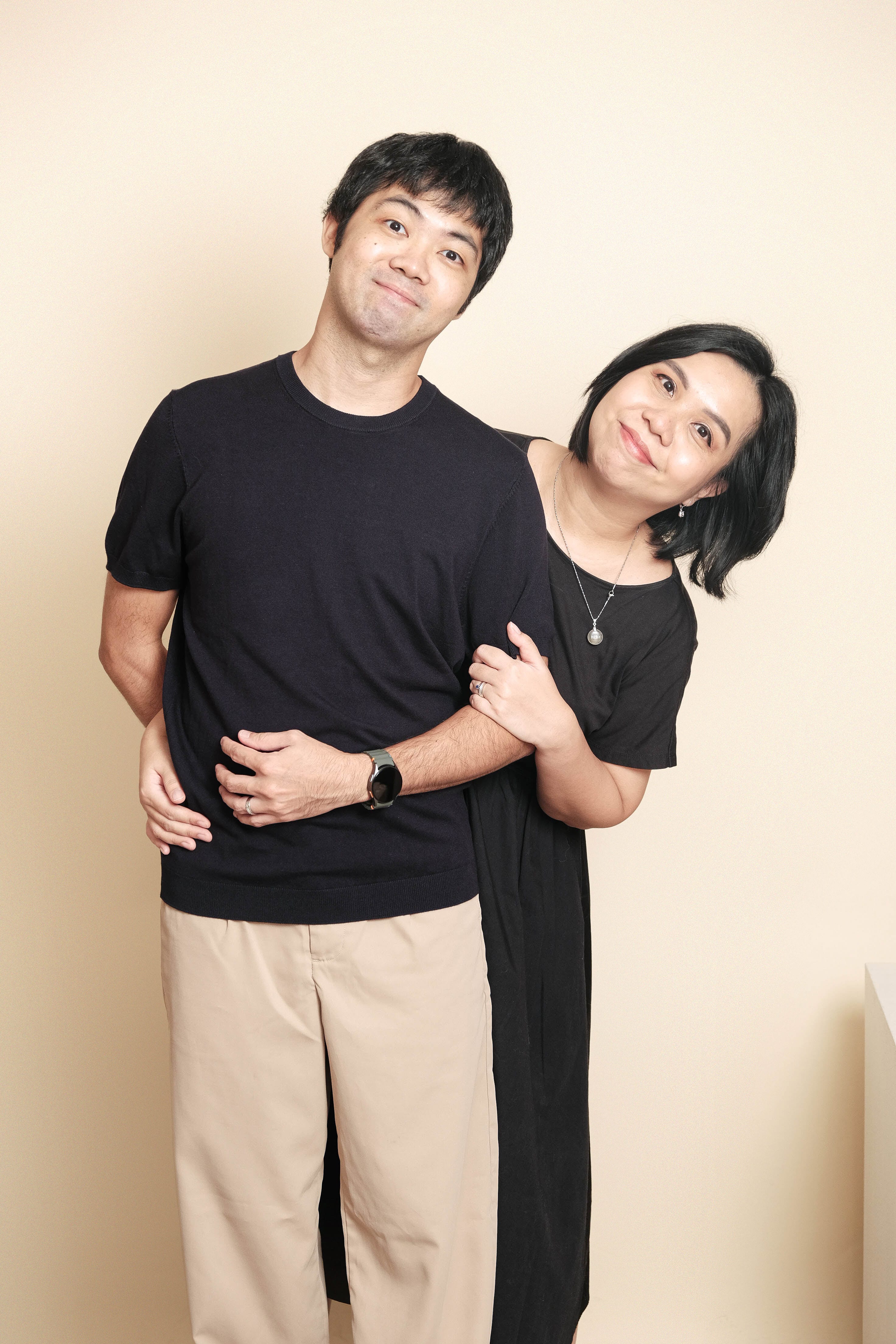
Albert and Kitty Carpeña
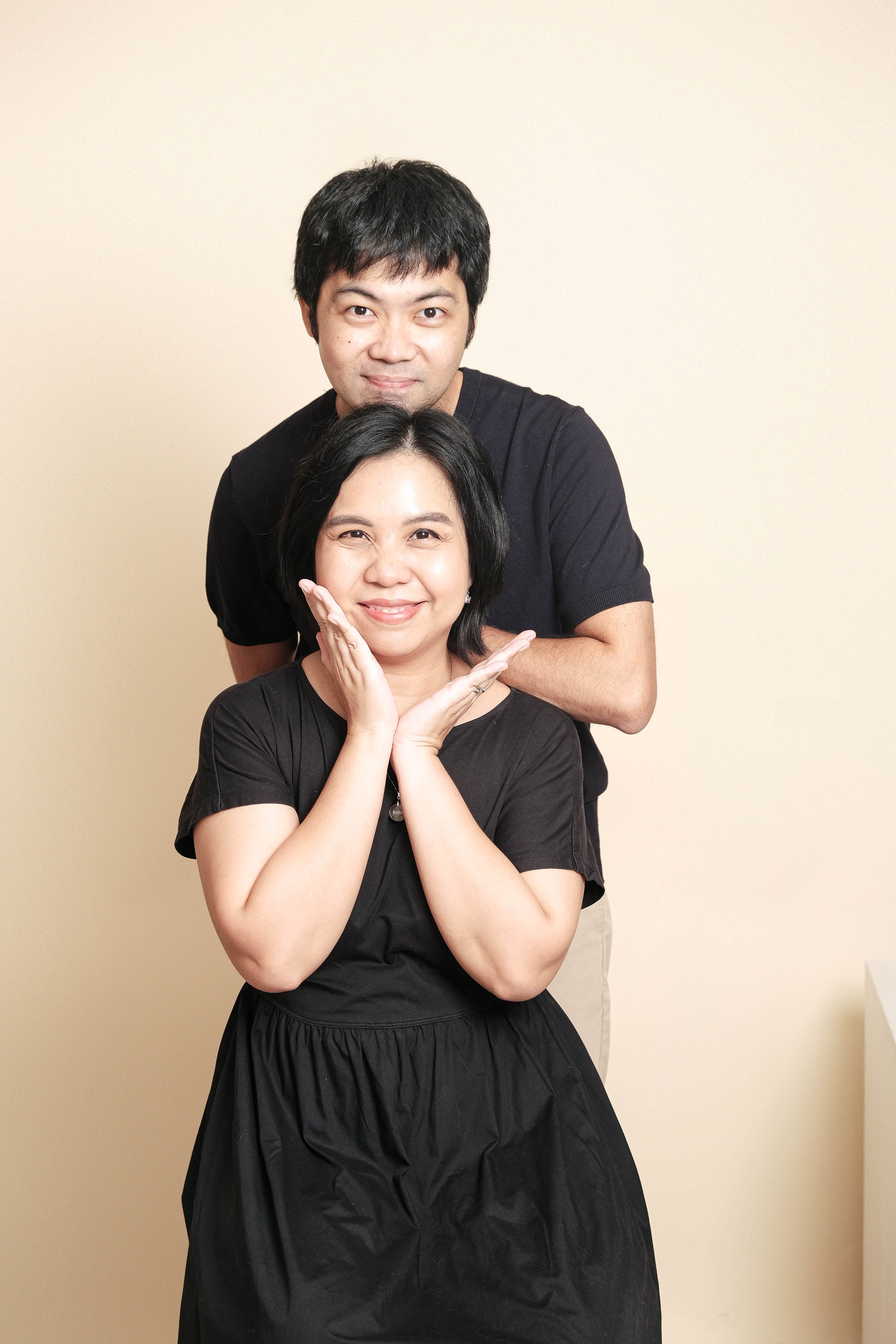

Photos courtesy of Kitty Elicay-Carpeña
photos to expand
For the next two weeks, I had to grapple with pain, grief, and the realization that the world doesn’t stop turning just because mine did. I’ve always been a happy-go-lucky person, so I tried my best to put on a brave front while inside I was screaming—what do you mean my baby died inside me, and I have to wait for my body to recognize it as a loss and expel it? It was surreal to go back to normal routines while also playing the waiting game.
My husband and I also had to deal with telling our family and closest friends about the loss. The planned meetups to surprise them with pregnancy news became tear-filled conversations instead. But somehow, telling the story over and over again gave us some reprieve, and we wrapped ourselves in love and comfort from our loved ones.
When our deadline was up, my OB-GYN advised us to proceed with the D&C. At the hospital, I was given some medication to soften and open up my cervix. I was told to expect cramping and bleeding, but even after several doses, I still didn’t experience the side effects.
That night, I cried and talked to my baby. I’ve always wanted a boy, so I told him it was ok to let go. That mommy and daddy were going to be ok. I asked him to come back to me when he was stronger and the time was right.
In my eight weeks of pregnancy, I never gave myself a chance to be called mom. But at that moment, when I knew I was about to lose my child, I finally realized that I’ve been a mother all along—ever since the day I found out I was pregnant with my little one.
The next morning, my pregnancy finally ended. I thought I would feel relief that it was finally over, but I just felt empty. I had imagined that my next hospital stay would be because I would be giving birth to our child. Who would’ve thought it would be because I needed to remove my baby’s remains from inside my body?
For several days, I tried to come to terms with the loss. My only consolation was the fact that my doctor was able to save some of our unborn child’s remains in a small specimen jar, so we were able to ask a priest to bless and pray over it. Afterward, we buried the box with his remains in our garden. Somehow, giving him this send-off eased the pain in our hearts and helped us start to heal.
.jpg)
Finding Your Reason to Try Again
There is no “right” way to feel after a miscarriage. Grieving and coping is different for everyone, but if there’s one important thing I want to share with women who have dealt with pregnancy loss like me, it’s that you should never blame yourself.
It’s easy to feel guilty—you’re the one carrying your baby in the womb, so you’re responsible for the life inside. When I learned that our baby passed away, I couldn’t shake off the what-ifs. What if keeping the pregnancy secret made my baby think that we didn’t want him? What if he felt unwanted and unloved? Is that why he faded quietly and why his heart suddenly stopped beating?
.jpg)
It sounds irrational, but I think a lot of moms have these fears and these feelings of guilt, when in reality, there’s nothing you can do to cause a miscarriage in most cases, and nothing you can do to prevent it. So be kind to yourself. Take it one day at a time and heal at your own pace.
Don’t forget to check on your partner, too. They may react differently to the loss, but it doesn’t mean they’re not grieving with you. Throughout this ordeal, Albert held me steady. He was brave and strong for both of us, even though I knew he was breaking inside, too. He tolerated my dark humor because he knew it was my coping mechanism, and he did his best to make me laugh and distract me from our reality. He knew what I needed before I did, and he showed me what it really meant to be a partner and a spouse.
He loved enough for both of us, especially when it was hard for me to love myself. There were nights when he would wake up to my crying, and he would hold me and cry with me. We didn’t need to exchange words—we just had to let the tears fall and wait until the pain became bearable.
Finally, move forward when you are ready. Honestly, the thought of having another miscarriage scares me, but this ordeal also made me realize just how much I wanted a child. The thought of not doing everything we can to get pregnant makes me sad, so why not just go ahead and try again?
This time, however, we are more intentional about trying to conceive. We have already gone through several fertility tests, and because we are both in our late 30s, we have had to face some hard truths. Our chances of getting pregnant are now smaller, but we won't let the odds define us.
For now, we’ll focus on what we can control and take things one step at a time. There may be no guarantees, but we’d rather move forward with hope than let fear overcome us. Whatever the outcome, I want to know we gave it our best shot. Whatever the future holds, I know we’ll find our way through it together.
If you've experienced a similar loss and are looking for a community of empathetic parents who understand what you're going through, we invite you to visit Smart Parenting Village, where you can find connection, understanding, and support from fellow parents.