
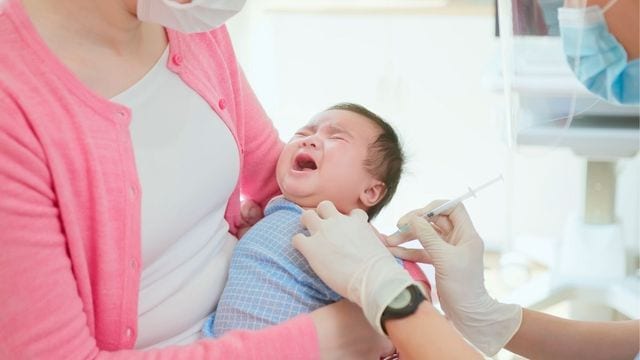
Vaccines protect children from life-threatening diseases and save millions of lives each year. To be effective, children need to complete all required doses on schedule, starting at birth and continuing through their first year. Additional doses may be required during supplementary or outbreak vaccination campaigns as announced by the Department of Health (DOH).
ALSO READ: Childhood Immunization Schedule 2019: Vaccines Your Child Needs From Birth to 18 Years Old
Why Childhood Vaccination Matters
Since newborns' immune systems are still developing, they're more vulnerable to infections. Vaccines help strengthen their defenses, keeping them safe from harmful diseases. Getting all the required vaccines is important, and it's easier than ever since routine vaccines are available for free at public health centers and facilities.
By ensuring your child receives their vaccines, you're helping to reduce the risk of complications and long-term health issues. Although mild side effects like fever or fatigue may occur, they are usually short-lived and are a small trade-off for the long-term benefits of immunity.
Vaccines for Newborns and the Diseases They Prevent
Here's a list of recommended vaccines for newborns, from birth to 2 months, as suggested by the World Health Organization (WHO), along with a brief overview of the diseases they protect against.
BCG Vaccine
- Protection from: Tuberculosis
- When to give: At birth
According to DOH, the BCG vaccine protects infants against tuberculosis. The letters B, C, and G stand for Bacillus Calmette-Guérin. "Bacillus" refers to the shape of the bacterium, while "Calmette" and "Guérin" are the names of the scientists who developed the vaccine.
Tuberculosis (TB) is a serious infection that primarily affects the lungs but can also spread to the brain, bones, and other organs in young children. Severe cases can lead to complications or death. The BCG vaccine helps protect against severe forms of TB, such as meningitis and disseminated TB.
Hepatitis B (HepB) Vaccine
- Protection from: Hepatitis B
- When to give: At birth
The Hepatitis B vaccine protects against Hepatitis B infection and contains a single antigen (monovalent). According to DOH, "only monovalent HepB vaccine should be used as a birth dose (24 hours).
Hepatitis B is a serious liver infection that can remain silent for decades before leading to cirrhosis or liver cancer. Infants infected at birth have a high risk of developing chronic hepatitis B. Since there's no cure, early vaccination is essential.
DPT-HepB+Hib or Pentavalent Vaccine
-
Protection from: Diphtheria, Pertussis, Tetanus, Haemophilus Influenzae type b, and Hepatitis B
-
When to give: 6, 10, and 14 weeks
The DPT-HepB+Hib vaccine, known as a pentavalent vaccine, protects against five diseases. It may be available in single or multi-dose vials and is not given as a birth dose.
As for the diseases:
- Diphtheria can block airways and make breathing or swallowing difficult. Severe cases can lead to paralysis, heart failure, and death.
- Pertussis (whooping cough) causes severe coughing spells that can last weeks, leading to breathing problems, pneumonia, and even death.
- Tetanus causes painful muscle contractions, including lockjaw, which makes eating and breathing difficult. Even with treatment, it is often fatal.
- Haemophilus Influenzae type b (Hib) causes serious diseases like meningitis and pneumonia in young children.
Polio Vaccines
- Oral Polio Vaccine (OPV) - Given at 6, 10, and 14 weeks
- Inactivated Polio Vaccine (IPV) - Given at 14 weeks and 9 months
- Protection from: Poliovirus
Two types of polio vaccines are used worldwide to provide immunity against the poliovirus: one uses inactivated (dead) poliovirus, and the other uses attenuated (weakened) poliovirus.
Polio is a highly contagious virus that can cause paralysis in one in 200 infected individuals. Among those paralyzed, 5–10% die due to breathing muscle failure. There is no cure, so vaccination is the best prevention.
Pneumococcal Conjugate Vaccine (PCV)
- Protection from: Pneumonia and Meningitis
- When to give: 6, 10, and 14 weeks
According to DOH, the PCV protects young children against several strains of Streptococcus pneumoniae. Meanwhile, older children and adults receive the pneumococcal polysaccharide vaccine (PPSV) to protect against a broader range of pneumococcal strains.
Pneumococcal disease is a leading cause of sickness and death worldwide, especially in children under two years old. The PCV vaccine protects against pneumonia, meningitis, and other pneumococcal infections.
Measles-Rubella (MR) and Measles-Mumps-Rubella (MMR) Combination Vaccines
- Protection from: Measles, Mumps, and Rubella
- When to give: 9 months and 1 year old
In the Philippines, the National Immunization Program (NIP) uses combination vaccines for measles, rubella (MR), and measles, mumps, and rubella (MMR).
- Measles spreads easily and can cause fever, rash, pneumonia, blindness, and brain swelling. Severe cases can be fatal.
- Mumps leads to fever, headache, and swollen salivary glands, with possible complications like meningitis, testicular inflammation, and deafness.
- Rubella is usually mild but dangerous for pregnant women, as it can cause miscarriage, stillbirth, or severe birth defects.
Additional Vaccines
Some vaccines, such as the varicella (chickenpox) and pneumococcal polysaccharide vaccines, are not part of the routine immunization schedule but may offer additional protection. Parents should consult healthcare providers to determine if these vaccines are appropriate for their child.
Take a look at more optional vaccines for newborns listed below:
Respiratory Syncytial Virus (RSV) Vaccine
- Protection from: Severe respiratory illness in infants
- When to give: One dose before or during RSV season (typically fall through spring)
The RSV immunization helps protect infants during peak infection seasons.
RSV can cause breathing difficulties, feeding problems, and severe lung infections. In some cases, hospitalization is necessary.
Rotavirus Vaccine
- Protection from: Rotavirus
- When to give: 1st dose at 2 months, followed by one or two more doses depending on the brand
The rotavirus vaccine protects children from rotaviruses, which are the leading cause of severe diarrhea in infants and young children. Rotavirus can lead to dehydration, a potentially life-threatening condition for babies.
Completing the Vaccination Schedule
Children who miss routine vaccines should receive them through catch-up vaccinations. Timely immunization protects your child and helps protect their friends, classmates, and the broader community by preventing disease outbreaks.
Make sure to consult with your healthcare provider for the most current immunization schedule for your baby!
Learn more about why vaccination is crucial for babies here.
More from sp

Lorem ipsum dolor sit amet, consectetur adipisicing elit, sed do eiusmod
Lorem ipsum dolor sit amet, consectetur adipisicing elit, sed do eiusmod
