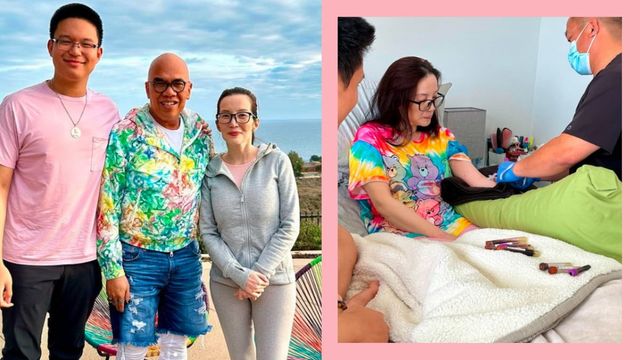
Kris Aquino was seen on screen again when she made a guest appearance via Zoom in Boy Abunda’s show, Fast Talk with Boy Abunda.
In the interview, Kris shared more details about the current state of her health and she admitted that the results of her last blood panel was not good. She said, “What was alarming was sobrang bumagsak yung hemoglobin ko that’s part of yung CBC panel natin.”
Kris, who’s currently abroad seeking treatment, has been transparent about her health struggles on her Instagram account. Here's a breakdown of her diagnoses:
- Chronic Spontaneous Urticaria
- Autoimmune Thyroiditis
- Churg-Strauss syndrome or EGPA
- Erosive Gastritis and Gastric Ulcer
- Mixed Connective Tissue Disease (MCTD)
Chronic Spontaneous Urticaria
Kris was first diagnosed with chronic spontaneous urticaria (CSU) in 2018. Also known as chronic idiopathic urticaria (CIU), this condition causes hives anywhere on the body and may last from 30 minutes to 24 hours. Severe or long-lasting CSU can also cause other symptoms such as headache, fatigue, joint pain or swelling, sudden reddening of your face, neck or upper chest, wheezing, stomach symptoms like diarrhea, or rapid heartbeat.
CSU is considered “idiopathic” for up to 95% of the patients, which means that there’s no clear cause. However, people with CSU are more likely to have autoimmune disorders–where the body’s immune system may be in overdrive, attacking healthy tissue. Other conditions that are linked to CSU include thyroid disorders, celiac disease, Sjogren syndrome, lupus, rheumatoid arthritis, and type 1 diabetes.
Currently, there’s no cure for CSU and it can sometimes go away on its own. Patients can try to learn their triggers and avoid them if possible. Hives are often treated using high-dose oral antihistamines or a round of steroids.
Autoimmune Thyroiditis
In 2022, Kris revealed her diagnosis of autoimmune thyroiditis, also known as Hashimoto’s disease. This condition occurs when the body mistakenly attacks the thyroid gland, leading to inflammation. Symptoms may include goiter, fatigue, weight gain, and depression.
Once the thyroid gets damaged, it can lead to hypothyroidism, which can then have the following symptoms: tiredness, sensitivity to cold, puffy face, trouble pooping, enlarged tongue, pale dry skin and brittle nails, hair loss, weight gain, muscle aches and joint pain, depression, memory lapse, and heavy menstrual bleeding.
Treatment usually involves thyroid hormone replacement therapy such as a prescription medicine called levothyroxine (Levo-T, Levothroid, Levoxyl, Synthroid, Tirosint, Unithroid).
Churg-Strauss syndrome or EGPA
Kris also shared her diagnosis of Churg-Strauss syndrome or eosinophilic granulomatosis with polyangiitis (EGPA) in 2022. This rare condition involves inflammation of blood vessels, which can affect various organs.
One of the most common signs of Churg-Strauss is adult-onset asthma. Other problems associated with the syndrome are nasal allergies, and sinus problems. Other symptoms include appetite and weight loss, joint and muscle pain, abdominal pain and gastrointestinal bleeding, weakness or general feeling of unwell, rash or skin sores, pain, numbness and tingling in the hands and feet.
Churg-Strauss is considered incurable. Symptoms are typically controlled with steroids and other powerful immunosuppressant drugs.
Read: Ano Ang Vasculitis, Mga Posibleng Sanhi At Kadalasang Sintomas Nito
Erosive Gastritis and Gastric Ulcer
Kris disclosed being diagnosed with erosive gastritis and gastric ulcer in 2022. Erosive gastritis is the inflammation of the stomach lining, often caused by factors such as an H. pylori bacterial infection, alcohol abuse, physical stress, smoking, autoimmune disease, and certain medications.
Symptoms of gastritis can include bloating, nausea and vomiting, upper abdominal pain, no appetite, unexplained weight loss, and feeling “full” even after a light meal. More severe symptoms can include black tarry stools, stomach ulcers, and vomiting of blood.
Treatment aims to alleviate symptoms and address underlying causes.
Mixed Connective Tissue Disease (MCTD)
Kris’s most recent diagnosis is mixed connective tissue disease or MCTD, which is also called overlap disease. Also considered an uncommon disease, it combines features of lupus, scleroderma, and polymyositis.
In MCTD, the symptoms of the separate diseases don’t all appear at one, instead, occurring over a number of years. Early signs and symptoms usually involve the hands, wherein fingers might get puffy, the fingertips get white and numb often in response to cold exposure. Other symptoms include a general feeling of being unwell, muscle and joint pain, and rash. Some organs such as the lungs, heart, and kidneys could get affected in later stages.
While there is no cure for MCTD, treatment focuses on managing symptoms and preventing complications.
Kris Aquino’s journey with autoimmune diseases highlights the importance of awareness, support, and access to treatment. By sharing her experiences, she empowers others facing similar health challenges to seek understanding and support.
What other parents are reading

Lorem ipsum dolor sit amet, consectetur adipisicing elit, sed do eiusmod
Lorem ipsum dolor sit amet, consectetur adipisicing elit, sed do eiusmod